


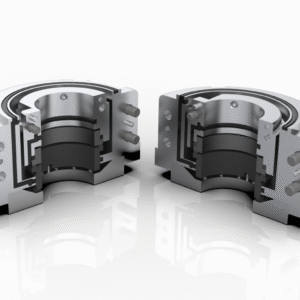
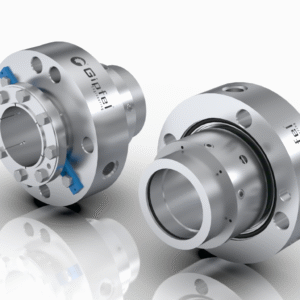
API 682 mechanical seals are precision-engineered to meet the stringent operational and environmental demands of rotating equipment in industries such as oil & gas, petrochemical, chemical processing, and power generation. Manufactured in full compliance with the American Petroleum Institute’s Standard 682, these seals offer industry-standard performance, interchangeability, and regulatory adherence across global applications.
Designed with a strong emphasis on standardization, modularity, and long-term durability, API 682-compliant seals provide:
- Superior leakage control
- Extended equipment uptime
- Minimized maintenance frequency
Their robust construction and proven reliability make them the go-to choice for mission-critical applications where seal failure is not an option.
🔧 Seal Arrangements (API 682 – 4th Edition)
API 682 defines three primary seal arrangements to accommodate various service severities and safety requirements:
- Arrangement 1 – Single Seal, with or without external flush: Ideal for clean, non-hazardous services.
- Arrangement 2 – Dual Unpressurized Seal (Tandem): Includes a backup seal in case of primary seal failure; typically used with a buffer fluid system.
- Arrangement 3 – Dual Pressurized Seal (Double): Ensures maximum containment for hazardous or toxic fluids using a barrier fluid maintained at a pressure higher than the process fluid.
Seal arrangement selection depends on factors such as fluid properties, pressure, temperature, and equipment criticality.
🔄 Seal Flush Plans (Piping Plans)
API 682 also standardizes auxiliary piping plans that manage fluid circulation, cooling, and seal face cleanliness, supporting safe and efficient operation:
- Plan 11 – Recirculation from pump discharge to seal chamber (standard for clean fluids).
- Plan 32 – External flush from a clean source (used in dirty or slurry services).
- Plan 52 – For Arrangement 2: Unpressurized buffer fluid system with a reservoir.
- Plan 53A/B/C – For Arrangement 3: Pressurized barrier systems using either a reservoir (53A), bladder accumulator (53B), or thermosiphon loop (53C).
- Plan 62 – External quench, used in applications involving crystallizing or polymerizing media.
These flush plans ensure thermal stability, seal-face cleanliness, and contaminant isolation—all critical to seal longevity and performance.
✅ Summary
API 682 mechanical seals set the global benchmark for sealing performance, operational safety, and environmental compliance in demanding process environments. With modular designs, standardized configurations, and advanced support systems, they remain the preferred sealing solution for critical equipment in high-stakes industrial applications.
Key Features:
- Hydraulically Balanced Seal Faces: Reduce axial face load to minimize wear, lower heat generation, and extend operational seal life.
- Global Compatibility: Offered in both metric and imperial (inch) sizes, suitable for a wide range of international equipment specifications.
- Quick Installation & Maintenance Access: Simplified installation and removal design reduces equipment downtime and maintenance labor requirements.
- Rotary & Stationary Metal Bellows Options: Engineered for durability under high temperature and corrosive conditions, offering flexibility based on application needs.
- Non-Directional Operation: Capable of operating in both clockwise and counterclockwise shaft rotations, allowing easy installation without concern for rotation direction.
- Factory Assembled & Performance Tested: Delivered pre-assembled and tested for pressure integrity and compliance with API 682 standards, ensuring immediate field reliability.
- Integrated Flush and Quench Connections: Fully compatible with API 682 piping plans (e.g., Plan 11, 32, 52, 53) for improved cooling, cleaning, and environmental control.
- Single and Dual Seal Arrangements: Available in Arrangement 1 (single), 2 (tandem), and 3 (double pressurized) configurations to meet a range of containment and safety requirements.
- Flexible Spring Configurations: Includes rotary, stationary, and multiple spring designs to accommodate shaft movement, pressure variation, and even face loading for consistent sealing.
- API 682 Categories 1, 2 & 3 – Type A, B, and C Designs: Compliant with all API 682 categories and types for deployment in light, moderate, and severe service conditions across critical industrial applications.
Specification:
| Application |
Suitable for demanding services in the petrochemical, oil and gas, chemical, refining, and power generation industries, including LPG plants and other API 610 / ISO 13709 process pump installations. These seals are designed for hazardous or high-temperature liquids, light and heavy hydrocarbons, and other critical process media, where high integrity and environmental protection are required. |
|
| Materials | Faces | Carbon / Silicon Carbide / Tungsten Carbide |
| Elastomer | EPDM / FKM (Viton) / FFKM (Kalrez) / PTFE / Graphite | |
| Hardware | SS 316 / SS 316L / Hastelloy C-276 / Alloy 20 / Titanium / Carpenter | |
| Bellow Material | AM-350 / Alloy 20 / Hastelloy C / Inconel 625 / Titanium | |
| Operating Limits | Size | 20.0 mm to 150.0 mm (0.750” to 6.000”) |
| Pressure | Vacuum … 35 bars (508 psi) | |
| Temperature | -130°C to +400°C (-202°F to +752°F) | |
| Speed | 3600 RPM | |

Reviews
There are no reviews yet.