

Description;
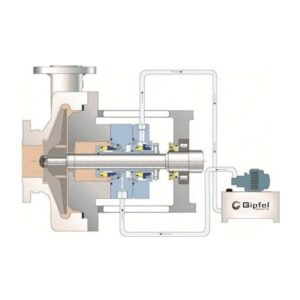
API Plan 32 supplies a clean, compatible external liquid directly into the seal chamber to improve the operating environment around the mechanical seal faces. The injected flush dilutes or displaces abrasive particles, suspended solids, polymerizing compounds, oxidizing contaminants, or vapors that may otherwise damage the seal faces, restrict face cooling, or cause unstable seal operation.
This plan is typically selected where the pumped fluid is unsuitable for internal circulation because it is dirty, hot, crystallizing, viscous, polymerizing, or contaminated. It is also used where the process can accept dilution from an external flush source and where the seal chamber must be pressurized to reduce flashing, vapor formation, or air intrusion in vacuum service.
Key Features;
· Provides a clean external flush directly to the mechanical seal chamber.
· Improves seal-face cooling and lubrication in hot or poor-lubricity services.
· Suitable for vacuum services where positive flush pressure reduces air ingress.
· Compatible with single mechanical seals in API-style pump sealing arrangements.
· Supports stable seal operation where pumped media may flash, vaporize, or crystallize.
· Helps exclude solids, contaminants, pulp fibres, and polymerizing residues from the seal faces.
· Allows controlled flush regulation using a strainer, flow meter, control valve, pressure indicator, and temperature indicator.
Service Overview;
Parameter Value
Equipment Centrifugal pumps, process pumps, paper stock pumps, slurry-handling pumps, high-temperature process pumps
Fluid Dirty or contaminated liquids, paper pulp, fluids with solids, oxidizing fluids, polymerizing media, hot process liquids
Service Nature External clean flush injection into the seal chamber
Operating
Mode Continuous controlled flush with regulated pressure and flow
Specifications;
Item Min Max Typical/Notes
Size 6 mm (0.250”) tubing 25 mm (1.000”) tubing Final line size selected by seal size, flush rate, and site standard
Pressure Seal chamber pressure + 1 bar (15 psi) Seal chamber pressure + 2 bar (30 psi) or higher if required Flush pressure must remain above seal chamber pressure
Temp Ambient flush Application dependent Flush liquid should be compatible and cool enough to remove seal heat
Speed Equipment dependent Equipment dependent Applicable to single seals where Plan 32 flush is suitable
Materials;
Component Standard Material Optional Material Comment
Tubing /
Pipework SS 316 SS 304, Duplex SS, Alloy 20, Hastelloy Select based on flush liquid and site corrosion requirements
Control Valve SS 316 needle/globe valve Alloy construction Used for flush-flow regulation
Flow Meter SS 316 body with glass/metal tube Digital flow transmitter Recommended for reliable flush verification
Strainer SS 316 Y-strainer Duplex SS, Hastelloy Protects the restriction or control valve from blockage
Instruments Pressure indicator, temperature indicator Pressure/temperature transmitters Optional monitoring for critical services
Connections NPT / BSP / flanged Compression fittings, welded fittings Selected to suit the pump gland and plant standard
Applications;
· Dirty or contaminated process-fluid services.
· Polymerizing, oxidizing, or crystallizing liquid services.
· Paper and pulp processing pumps handling fibrous stock.
· Slurry or solids-bearing fluids where the process permits dilution.
· High-temperature pump seal chambers requiring external cooling flush.
· Chemical, petrochemical, paper, refinery, and general process industries.
· Vacuum services requiring a positive seal-chamber flush to reduce air intrusion.
Operating Limits;
Parameter Value
Pressure Typically, seal chamber pressure + 1 to 2 bar (15 to 30 psi); final value per seal design and pump conditions
Temp Application dependent; flush liquid must remain compatible and non-vaporizing at service conditions
Speed Equipment dependent; governed by selected mechanical seal and pump speed
Size Range Typically, 6 mm to 25 mm (0.250” to 1.000”) flush piping/tubing
Selection note;
Exact flush flow, pressure margin, connection size, and instrumentation should be verified against the mechanical seal design, seal chamber pressure, fluid vapor pressure, and API 682 piping-plan requirements before release for manufacture or site installation.

Reviews
There are no reviews yet.