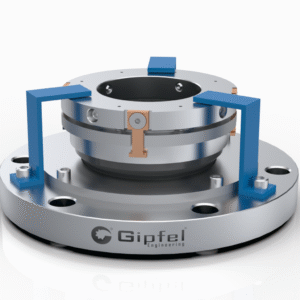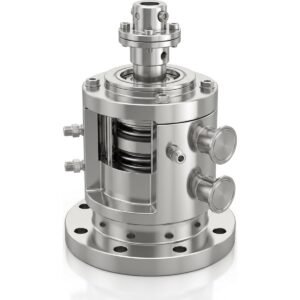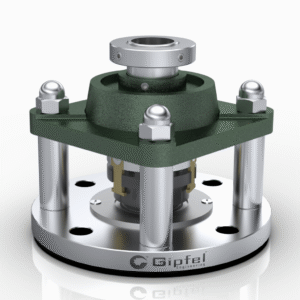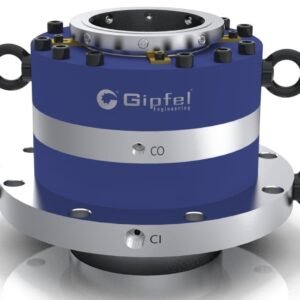
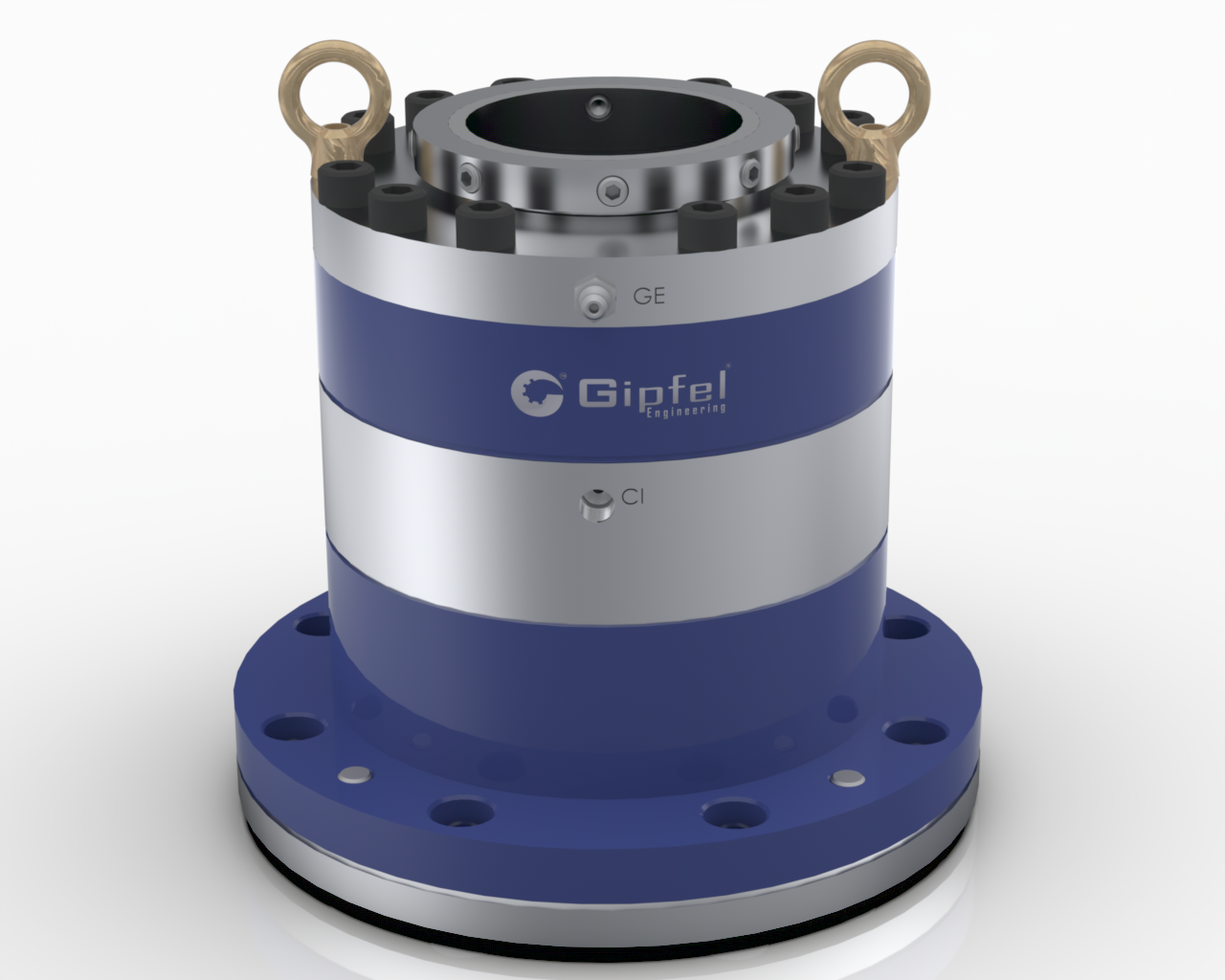
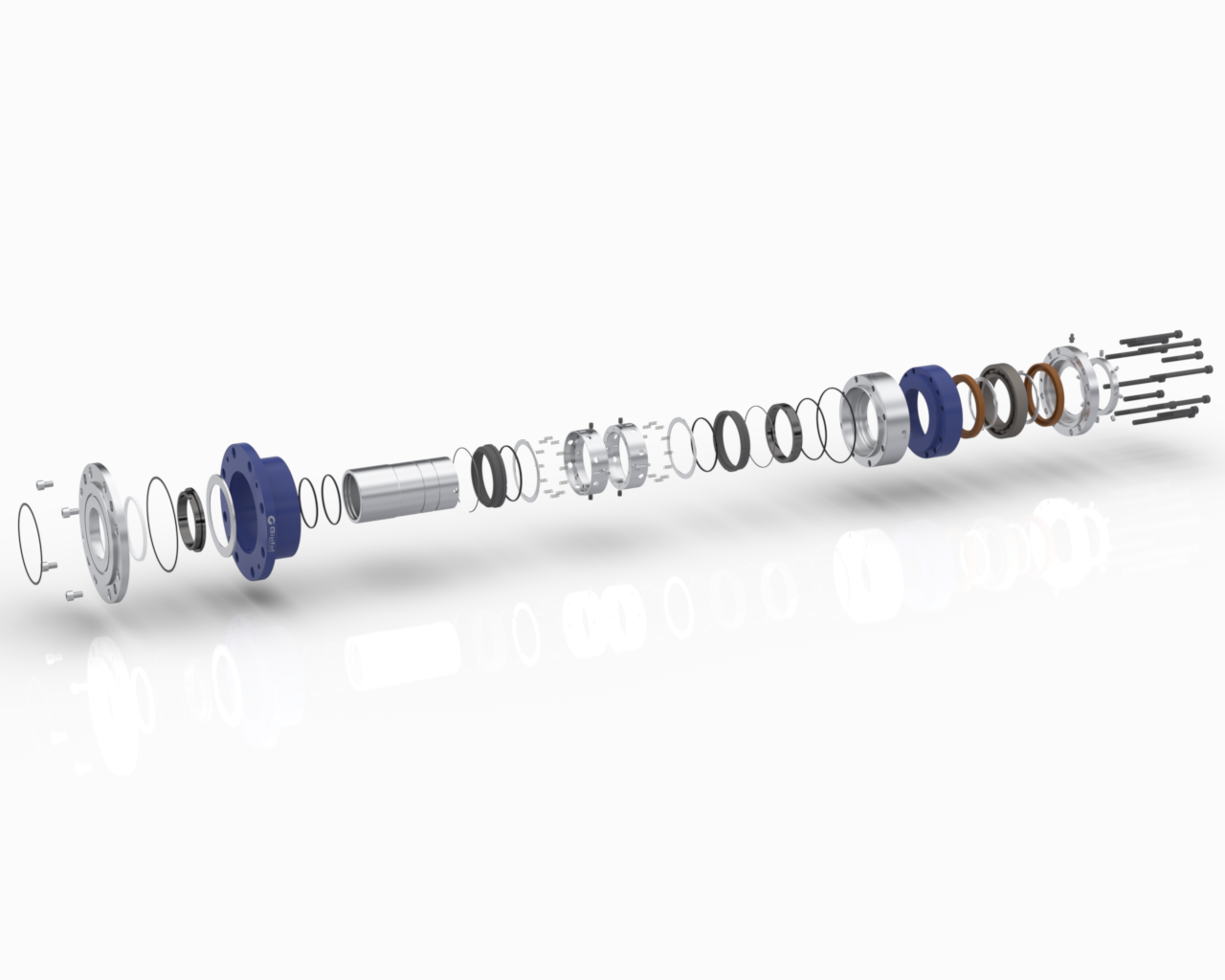
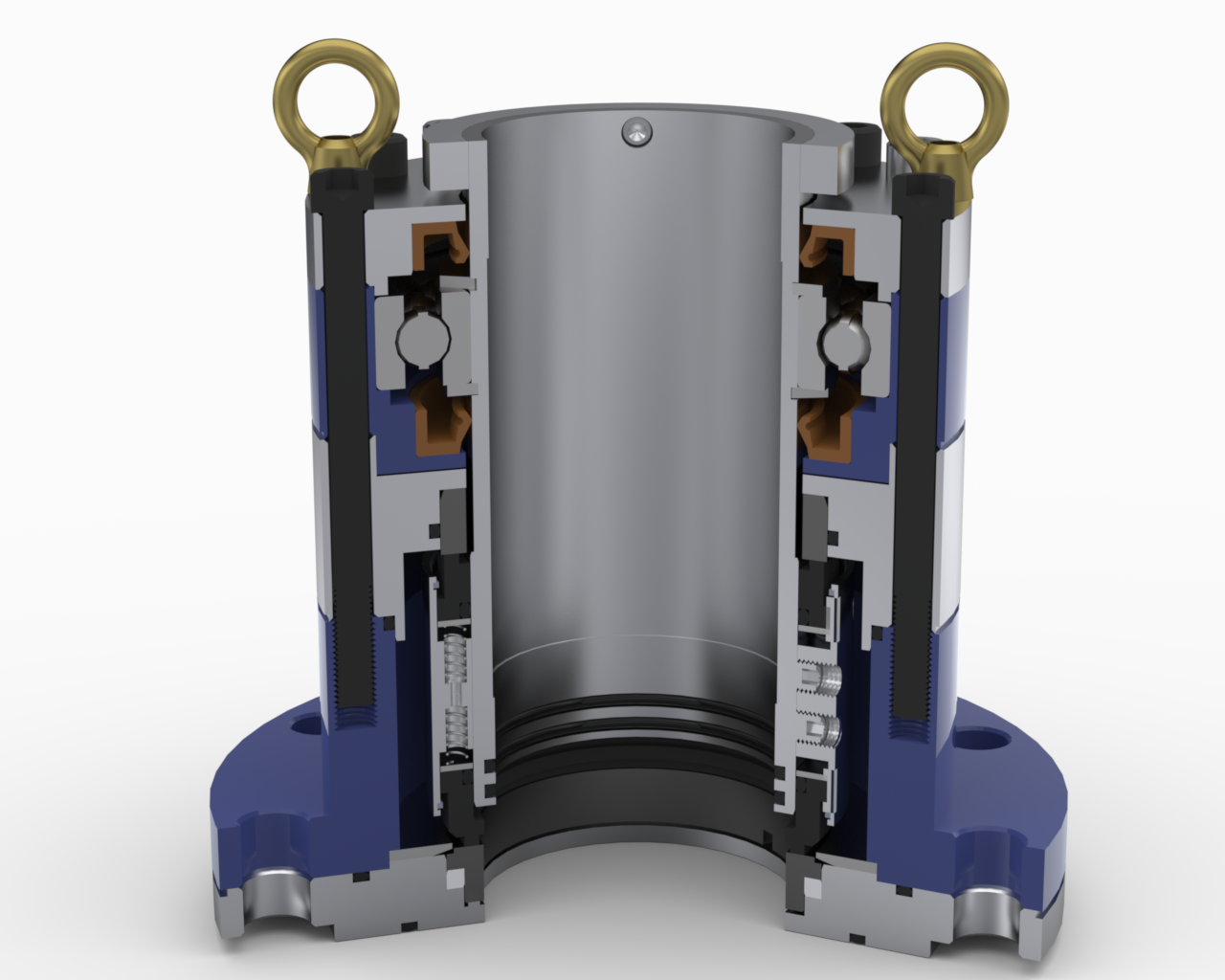
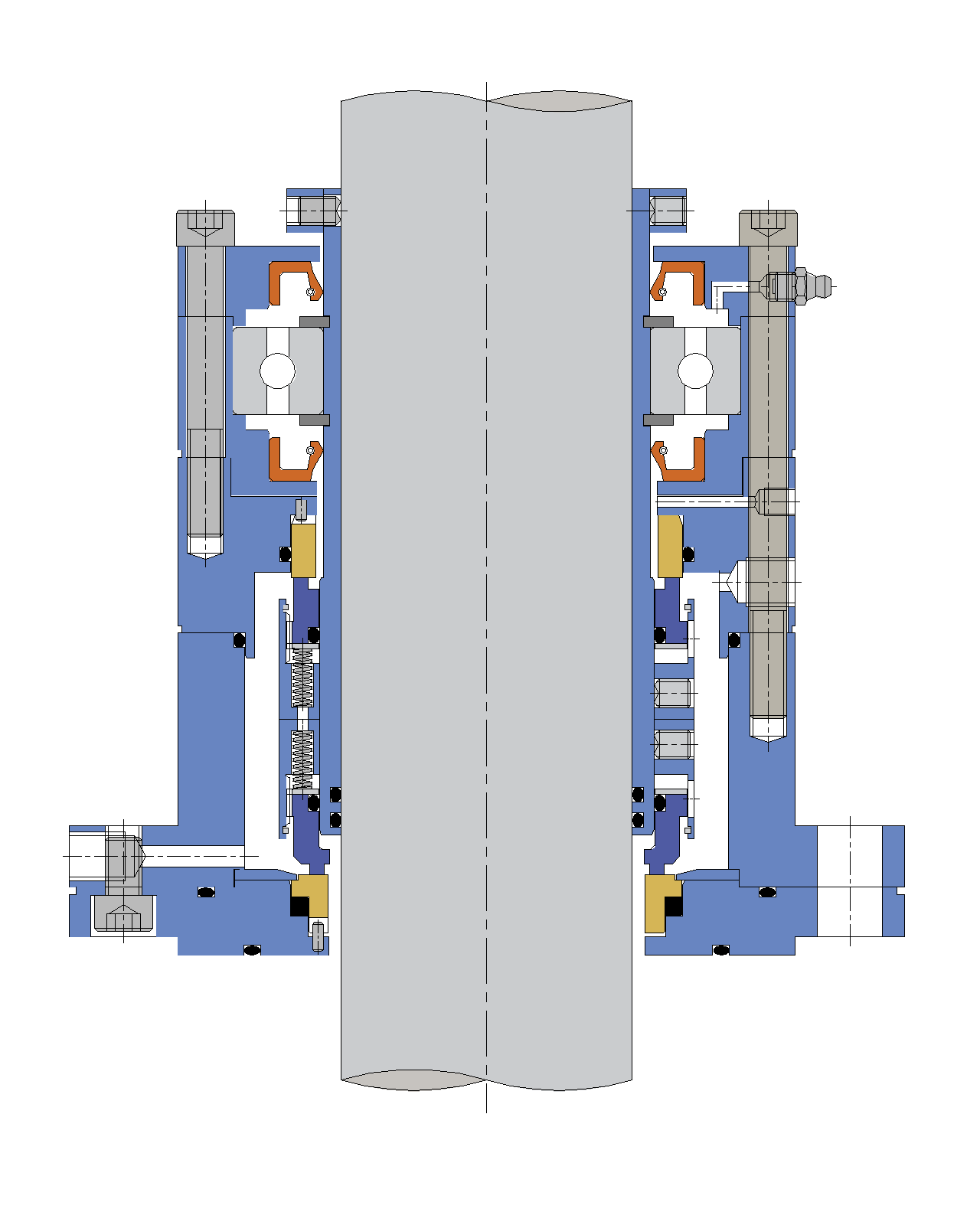
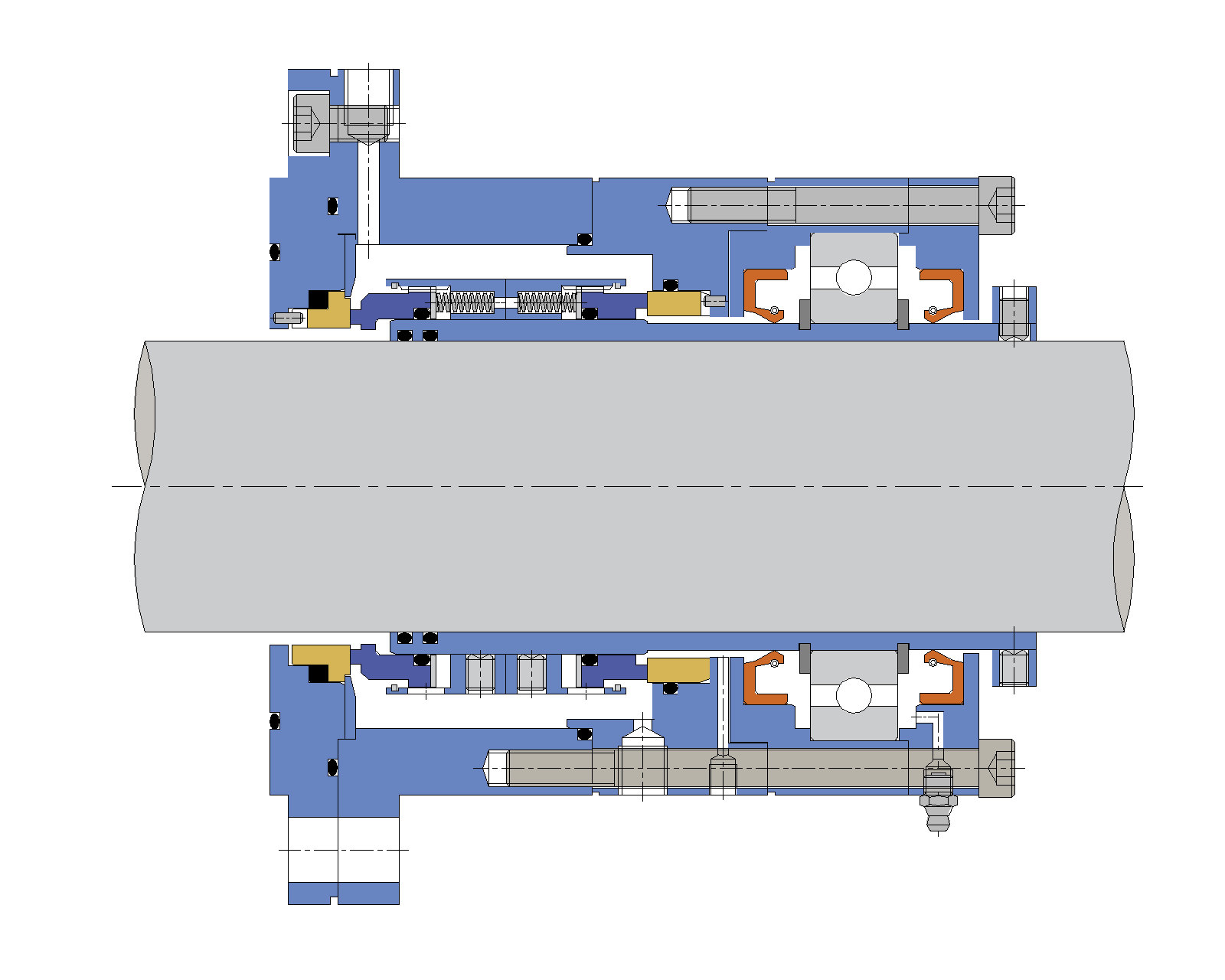
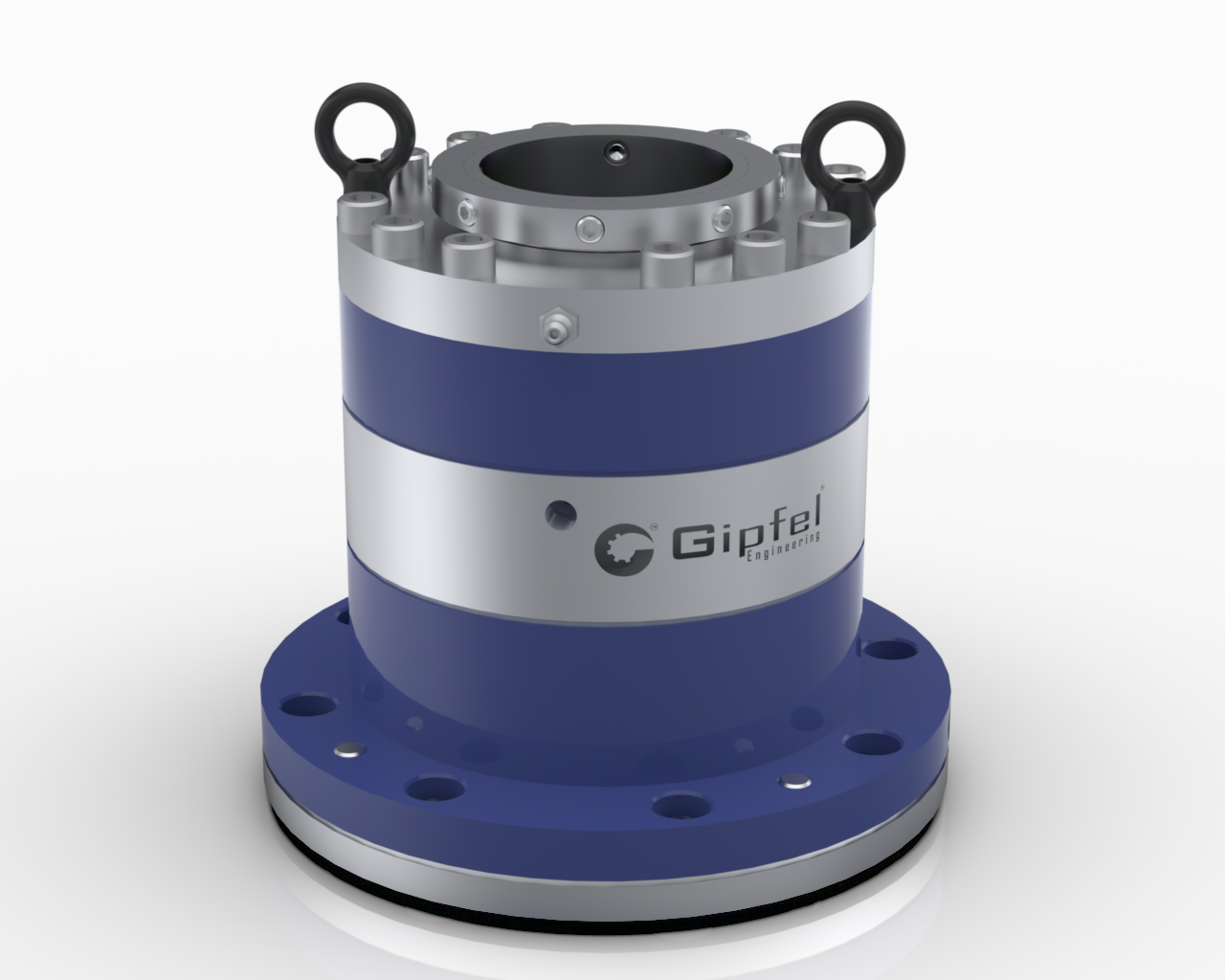
The ED945/ED950 is a double mechanical seal assembly engineered for rotating equipment where shaft stability, containment reliability, and process safety are critical. Designed with an integrated bearing assembly, the unit provides improved shaft guidance and seal-face alignment in top-, bottom-, and side-entry equipment, making it especially effective in applications where agitator deflection, vessel pressure, runout, or media viscosity can affect seal performance.
Available in balanced (ED950) and unbalanced (ED945) configurations, the ED945/ED950 is suitable for pressurized barrier- or buffer-fluid operation in hazardous, toxic, sticky, viscous, crystallizing, polymerizing, and solvent-based services. The double-seal arrangement delivers enhanced leakage control and process isolation for reactors, mixers, glass-lined agitators, chemical blending tanks, pharmaceutical vessels, food-grade processing equipment, and classified-area mixing systems.
This pre-assembled, factory-tested cartridge seal is designed for ease of installation, dependable operation, and reduced downtime. Its robust construction and material options make it highly suitable for chemical, pharmaceutical, food, and biotech applications where leak-tight containment is critical. An ATEX-compliant design can be provided as an option for use in potentially explosive atmospheres, with operating limits determined by application-specific explosion-protection and monitoring requirements.
Key Features
- Bi-directional operation suitable for both clockwise and counter-clockwise rotating shafts.
- Barrier- and buffer-fluid compatible design for improved environmental control and leakage management.
- Liquid-lubricated and cooling-system-ready construction for high-duty or thermally sensitive applications.
- Double seal arrangement for improved containment of hazardous, toxic, volatile, and high-value process media.
- Suitable for top-, bottom-, and side-entry equipment, including reactors, blending tanks, and process mixers.
- Balanced (ED950) and unbalanced (ED945) designs available to meet varying pressure conditions and fluid characteristics.
- Integrated bearing assembly helps stabilize shaft movement and reduce seal-face disturbance in agitator and mixer duties.
- Configurable materials and elastomers for chemical, pharmaceutical, food-grade, petrochemical, and hygienic applications.
- Balanced (ED950) and unbalanced (ED945) variants allow selection based on pressure, media behavior, and operating severity.
- Explosion-safe design option available for use in ATEX-rated zones, subject to configuration and certification requirements.
- Dual pressurized seal arrangement to protect product integrity and reduce leakage risk in hazardous and sensitive processes.
- Customizable configurations with non-standard sizes, special materials, and application-specific designs available on request.
- Cartridge-type assembly supplied pre-set and pre-tested for easier installation, faster setup, and improved alignment accuracy.
- Wide material selection including high-performance alloys, carbon, silicon carbide, and PTFE-based options for aggressive media.
- Robust construction for viscous and sticky media, including polymer, resin, epoxy, hydrocarbon, and slurry-like process conditions.
- Externally mounted design for easier inspection, adjustment, and seal replacement without disturbing critical equipment components.
- Optional metal-free wetted parts to help prevent corrosion and media contamination in high-purity or chemically aggressive services.
- Top-, bottom-, and side-entry compatibility for a wide range of installation orientations in mixing, blending, and agitation systems.
- Vacuum and pressure versatility for reliable performance under full vacuum, elevated pressures, and fluctuating operating conditions.
- Multiple seal arrangement options including back-to-back, face-to-face, and tandem layouts for application-specific sealing strategies.
- Reverse-pressure capability at the inboard side to maintain sealing integrity in systems with fluctuating or reverse pressure conditions.
- Rotary multi-spring configuration for uniform face loading, shaft-deflection tolerance, and stable sealing efficiency under dynamic conditions.
- Factory assembled and pressure tested as a complete unit to support fast installation, reliable sealing performance, and minimal startup issues.
- Compatible with glass-lined reactors using chemically compatible, non-damaging materials to protect glass-lined surfaces in corrosive or sensitive environments.
- Integrated bearing assembly supports shaft stability in overhung and vertical configurations, especially important for bottom-entry or cantilever-mounted shafts.
Service Overview
| Parameter | Value |
|---|---|
| Equipment | Top entry agitators, bottom entry mixers, side entry rotating equipment, reactors, blending tanks, process vessels |
| Fluid | Hydrocarbons, solvents, polymers, resins, epoxy, viscous media, sticky media, toxic chemicals, hazardous fluids, food-grade and pharmaceutical fluids |
| Service Nature | Hazardous, toxic, viscous, sticky, crystallizing, polymerizing, solvent-based, hygienic, and chemically aggressive services |
| Operating Mode | Double mechanical seal with barrier/buffer fluid system; suitable for continuous or batch process operation |
Specifications & Operating Limits
| Parameter | Min | Max | Notes |
|---|---|---|---|
| Shaft Size | 20 mm / 0.750” | 300 mm / 12.000” | Larger sizes on request for reactor and agitator shafts |
| Pressure | Full vacuum, -1 bar(g) (-14.5 psi(g)) | Up to 250 bar(g) (3,625 psi(g)) | Maximum for balanced (ED950) designs; unbalanced (ED945) designs and glass-lined vessels are rated lower – confirmed for each duty |
| Temperature | -40 °C (-40 °F) | +250 °C (+482 °F) | Higher temperature options depend on elastomer, face, and barrier fluid selection |
| Speed | — | 1,400 rpm | Subject to shaft size, bearing span, runout, and equipment configuration |
Materials of Construction
Seal face pairs (standard pair: carbon vs silicon carbide)
| Pair | Face grades offered |
|---|---|
| Carbon vs silicon carbide | Resin-impregnated or antimony-impregnated carbon graphite vs sintered or reaction-bonded silicon carbide |
| Carbon vs tungsten carbide | Resin-impregnated or antimony-impregnated carbon graphite vs cobalt-bound or nickel-bound tungsten carbide |
| Silicon carbide vs silicon carbide | Sintered or reaction-bonded silicon carbide on both faces |
| Silicon carbide vs tungsten carbide | Sintered or reaction-bonded silicon carbide vs cobalt-bound or nickel-bound tungsten carbide |
| Tungsten carbide vs tungsten carbide | Cobalt-bound or nickel-bound tungsten carbide on both faces |
| Component | Standard | Options |
|---|---|---|
| Secondary Seals | FKM | NBR; EPDM; Aflas®; PTFE; FFKM; TTV; FEP-encapsulated FKM |
| Metal parts | SS 316; SS 316L | SS 304; Duplex SS; Hastelloy® C-276; Alloy 20; Titanium |
| Springs & Drive Parts | SS 316 | Hastelloy® C-276; Inconel® |
| Bearing Assembly | Bearing steel; MS; SS housing arrangement | Stainless steel; coated; or special alloy construction |
- Faces: hard-on-hard pairs for abrasive or solids-laden media; carbon vs silicon carbide for general duties.
- Elastomers: selected against the process media; EPDM is not for petroleum oils.
- Metals: selected by corrosion level, chloride content and temperature.
Aflas®, Hastelloy® and Inconel® are registered trademarks of their respective owners.
Applications
- Plastic and chemical industry process mixers.
- Paint, resin, pigment, and solvent blending vessels.
- Pharmaceutical, bulk drug, and biochemistry process reactors.
- Pulp and paper chemical preparation and additive mixing systems.
- Hazardous and toxic applications requiring double seal containment.
- Glass-lined reactor agitators for top, bottom, or side entry service.
- Foodstuff processing, hygienic mixers, and sanitary rotating vessels.
- Electron epoxy, adhesive, sealant, and high-viscosity media processing.
- Petrochemical, refining, hydrocarbon, and polymerization processing equipment.
- ATEX / IECEx classified-area mixing systems, when supplied with suitable certification package.
Barrier / Buffer Fluid Systems
| Plan | Purpose | Typical use |
|---|---|---|
| Plan 52 | Unpressurised buffer fluid from an external vented reservoir, circulated and cooled, for the outboard seal | Where controlled leakage collection is acceptable and product dilution must be avoided |
| Plan 53A | Pressurised barrier fluid from a gas-pressurised reservoir | Hazardous, volatile or crystallising services needing zero process leakage to atmosphere |
| Plan 53B | Pressurised barrier fluid from a bladder accumulator with cooler | Higher pressures, where gas must be kept out of the barrier fluid |
| Plan 54 | Pressurised barrier fluid circulated by an external system | Several seals on one system, or high heat removal |
A pressurised barrier (53A, 53B or 54) is used for hazardous or toxic media, with the barrier fluid kept above maximum vessel pressure. An unpressurised buffer (52) is used where controlled leakage collection is acceptable. The system is selected with the vessel design data and process specification.
Frequently Asked Questions
- What shaft sizes does the ED945 / ED950 cover?
20 mm to 300 mm (0.750” to 12.000”). Larger or custom sizes are available on request. - What are the operating limits of the ED945 / ED950?
Full vacuum to 250 bar(g) (3,625 psi(g)) for balanced (ED950) designs; -40 °C to +250 °C (-40 °F to +482 °F); and up to 1,400 rpm. Unbalanced (ED945) designs and glass-lined vessels are rated lower. These limits are not simultaneous and are confirmed for each duty. - What is the ED945 / ED950?
The ED945/ED950 is a double mechanical seal assembly engineered for rotating equipment where shaft stability, containment reliability, and process safety are critical. - Which mounting positions does the ED945 / ED950 suit?
Top, side and bottom entry, as listed for this seal. - Can the ED945 / ED950 run with a barrier or buffer fluid?
Yes. It suits pressurised barrier systems (Plans 53A, 53B, 54) for hazardous media and unpressurised buffer systems (Plan 52) where controlled leakage collection is acceptable. - Which seal face materials are available?
The standard pair is carbon vs silicon carbide; other pairs are selected by duty, including hard-on-hard pairs for abrasive media. - Which elastomers and metals are available?
Elastomers: FKM as standard, with NBR, EPDM, Aflas®, PTFE, FFKM, TTV or FEP-encapsulated FKM as options. Metal parts: SS 316 or SS 316L as standard, with SS 304, Duplex SS, Hastelloy® C-276, Alloy 20 or Titanium as options. - Is the ED945 / ED950 balanced or unbalanced?
ED950 is the balanced design (preferred for higher pressures and hazardous media) and ED945 is the unbalanced design (for lower-pressure duties); state the code when ordering. - Is the ED945 / ED950 supplied as a cartridge?
Yes. It is factory assembled as a cartridge unit, which simplifies installation and reduces assembly errors. - Does the ED945 / ED950 work in both directions of rotation?
Yes. It operates independently of the direction of shaft rotation. - Where is the ED945 / ED950 used?
Plastic and chemical industry process mixers; Paint, resin, pigment, and solvent blending vessels; Pharmaceutical, bulk drug, and biochemistry process reactors; Glass-lined reactor agitators for top, bottom, or side entry service; Pulp and paper chemical preparation and additive mixing systems.