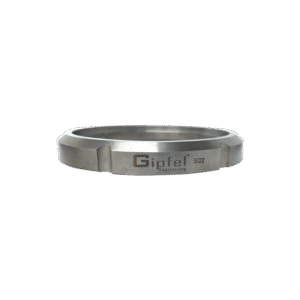


The DC660 is a heavy-duty face-to-face double cartridge multi-spring mechanical seal engineered for centrifugal and API process pumps, mixers, agitators and other critical rotating equipment operating with hazardous, corrosive, volatile, abrasive and environmentally sensitive process fluids. In this face-to-face dual-seal configuration, two balanced mechanical seals are arranged with their faces opposing each other and operated with a pressurised or unpressurised barrier/buffer fluid system, providing enhanced reliability, thermal stability and superior leakage containment under severe operating conditions.
The face-to-face arrangement optimises pressure distribution across both seal sets, creating a stable sealing environment and effective leakage control on the process and atmospheric sides of the seal chamber. This configuration is particularly suited to applications involving hazardous or high-pressure media, where process integrity, equipment protection and emission reduction are critical.
The DC660 features a cartridge-mounted construction with the seals pre-assembled on a sleeve and gland plate, allowing the complete unit to be installed over the pump shaft or sleeve in a conventional stuffing box, regardless of pump make. Factory preset working length minimises installation errors and ensures precise axial positioning, while the cartridge design simplifies handling, enabling quick installation and easy removal that reduce maintenance time and the need for highly skilled labour.
A multi-spring distributed loading system provides uniform face loading and stable dynamic behaviour, maintaining reliable operation under fluctuating pressures, vibration, thermal distortion and shaft movement. Combined with hydraulically balanced face geometry and suitable barrier/buffer fluid systems, this delivers excellent heat dissipation, controlled leakage and extended seal life in continuous-duty service.
The DC660 is ideally suited for chemical processing, refinery and petrochemical plants, pulp and paper mills, pharmaceutical production, mining and steel facilities, slurry-handling systems and wastewater treatment plants where dependable sealing performance, reduced emissions and high equipment uptime are mandatory. Its rugged, high-integrity design offers an efficient, durable and safety-focused sealing solution for the most demanding industrial process applications.
Key Features
- High resistance to pressure transients, vibration and shaft deflection, maintaining stable sealing performance in demanding operating conditions.
- Available in both metric and inch shaft sizes, ensuring compatibility with a wide range of pump specifications and international design standards.
- Bi-directional operation, independent of shaft rotation direction, allowing versatile use across different pump types and rotating-equipment configurations.
- Springs located outside or isolated from the process fluid path to resist clogging and corrosion, improving reliability in contaminated, viscous or particulate-laden services.
- Face-to-face double cartridge mechanical seal providing enhanced thermal control and reliable leakage containment for hazardous, toxic, crystallising and abrasive process media.
- Cartridge construction – factory assembled and tested, supplied as a preset unit for quick installation and easy removal, minimising setting errors, downtime and the need for highly skilled labour.
- Provision for flushing and quench connections, fully compatible with API 682 dual-seal support systems including Plans 52, 53A, 53B and 54, to optimise cooling, lubrication and environmental containment.
- Hydraulically balanced double-seal design with rotating multi-spring / wave-spring loading ensures uniform face pressure distribution, reduced heat generation and extended seal life under varying pressures and temperatures.
- Customisable metallurgy and elastomer combinations available to handle aggressive chemicals, hydrocarbons, slurries and other severe-duty services while supporting reduced fugitive emissions and improved environmental compliance.
Service Overview
| Parameter | Value |
|---|---|
| Equipment | API process pumps, centrifugal pumps, mixers, agitators, compressors, rotary equipment |
| Fluid | Hydrocarbons, chemicals, solvents, slurry, acids, wastewater, viscous fluids |
| Service Nature | Corrosive, hazardous, abrasive, high-temperature, volatile fluids |
| Operating Mode | Continuous-duty industrial operation with barrier/buffer fluid support |
Specifications & Operating Limits
| Parameter | Min | Max | Notes |
|---|---|---|---|
| Shaft Size | 20 mm / 0.750” | 300 mm / 12.000” | Larger sizes available on request |
| Pressure | Vacuum | 40 bar (580 psi) | Depending on seal arrangement & materials |
| Temperature | -40°C (-40°F) | +220°C (+428°F) | Based on elastomer selection |
| Speed | — | 2900 rpm | Application dependent |
Materials of Construction
Seal face pairs (standard pair: carbon vs silicon carbide)
| Pair | Face grades offered |
|---|---|
| Carbon vs silicon carbide | Resin-impregnated or antimony-impregnated carbon graphite vs sintered or reaction-bonded silicon carbide |
| Carbon vs tungsten carbide | Resin-impregnated or antimony-impregnated carbon graphite vs cobalt-bound or nickel-bound tungsten carbide |
| Silicon carbide vs silicon carbide | Sintered or reaction-bonded silicon carbide on both faces |
| Silicon carbide vs tungsten carbide | Sintered or reaction-bonded silicon carbide vs cobalt-bound or nickel-bound tungsten carbide |
| Tungsten carbide vs tungsten carbide | Cobalt-bound or nickel-bound tungsten carbide on both faces |
| Component | Standard | Options |
|---|---|---|
| Elastomers | FKM | EPDM; FFKM; PTFE |
| Metal parts | SS 316 | Duplex SS; Hastelloy® C-276; Alloy 20; Titanium |
| Springs | SS 316 | Hastelloy® C |
- Faces: hard-on-hard pairs for abrasive or solids-laden services; carbon vs silicon carbide for general duties.
- Elastomers: selected against the process fluid; EPDM is not for petroleum oils.
- Metals: selected by corrosion level, chloride content and temperature.
Hastelloy® is a registered trademark of their respective owners.
Applications
- Pulp and paper stock pumps
- Power plant auxiliary systems
- Food and beverage processing systems
- API process pumps and refinery pumps
- Sugar and distillery process applications
- Steel and mining slurry handling systems
- Water and wastewater treatment facilities
- Chemical and fertilizer manufacturing plants
- Pharmaceutical and hygienic process equipment
- Petrochemical and hydrocarbon processing units
- Agitators, mixers, and reactor circulation systems
Recommended API Plans (Dual Seal)
| Plan | Purpose | Typical use |
|---|---|---|
| Plan 52 | Unpressurised buffer fluid from an external vented reservoir, circulated and cooled, for the outboard seal | Where controlled leakage collection is acceptable and product dilution must be avoided |
| Plan 53A | Pressurised barrier fluid from a gas-pressurised reservoir | Hazardous, volatile or crystallising services needing zero process leakage to atmosphere |
| Plan 53B | Pressurised barrier fluid from a bladder accumulator with cooler | Higher pressures, where gas must be kept out of the barrier fluid |
| Plan 53C | Pressurised barrier fluid from a piston accumulator referenced to seal chamber pressure | Services with varying seal chamber pressure |
| Plan 54 | Pressurised barrier fluid circulated by an external system | Several seals on one system, or high heat removal |
Plan 52 (unpressurised buffer) or Plans 53A, 53B, 53C and 54 (pressurised barrier) are selected by duty. For toxic or vaporising services, Plan 52 requires a prior risk assessment; otherwise a pressurised barrier plan is specified, with the barrier fluid kept at least 1.5 bar above seal chamber pressure. The plan is selected with the P&ID and project specification for each duty.
More Downloads
- Product Guide – 8th Edition (PDF)
- IOM – Installation, Operation & Maintenance Manual, Single Cartridge Mechanical Seals (PDF)
Frequently Asked Questions
- What shaft sizes does the DC660 cover?
20 mm to 300 mm (0.750” to 12.000”). Metric and inch sizes are available. - What are the operating limits of the DC660?
Vacuum to 40 bar (580 psi); -40°C to +220°C (-40°F to +428°F), depending on elastomer selection; and up to 2900 rpm. These limits are not simultaneous. - What is the DC660?
The DC660 is a heavy-duty face-to-face double cartridge multi-spring mechanical seal engineered for centrifugal and API process pumps, mixers, agitators and other critical rotating equipment operating with hazardous, corrosive, volatile, abrasive and environmentally sensitive process fluids. - Which API plans suit the DC660?
Plan 52 with an unpressurised buffer fluid, or Plans 53A, 53B, 53C and 54 with a pressurised barrier fluid kept at least 1.5 bar above seal chamber pressure. The plan is selected by duty. - Which seal face materials are available?
Carbon vs silicon carbide is standard. Carbon vs tungsten carbide, silicon carbide vs silicon carbide, silicon carbide vs tungsten carbide and tungsten carbide vs tungsten carbide are also offered, in resin- or antimony-impregnated carbon graphite, sintered or reaction-bonded silicon carbide, and cobalt- or nickel-bound tungsten carbide. - Which elastomers and metals are available?
Elastomers: FKM as standard, with EPDM, FFKM or PTFE as options. Metal parts: SS 316 as standard, with Duplex SS, Hastelloy® C-276, Alloy 20 or titanium as options. - Does the DC660 need on-site setting?
No. It is supplied as a factory-assembled unit with preset working length, which reduces installation time and the risk of assembly errors. - Where is the DC660 used?
Pulp and paper stock pumps; Power plant auxiliary systems; Food and beverage processing systems; API process pumps and refinery pumps; Sugar and distillery process applications; Steel and mining slurry handling systems. - Is an installation manual available?
Yes. The Installation, Operation & Maintenance Manual is available under More Downloads; Annex A and B cover pressurised and unpressurised dual cartridge seals.