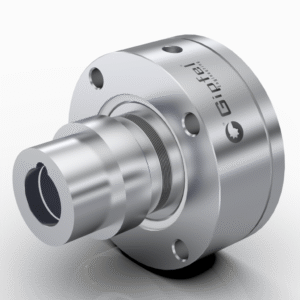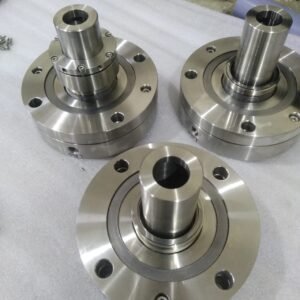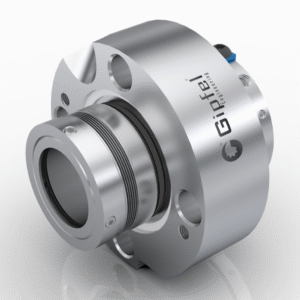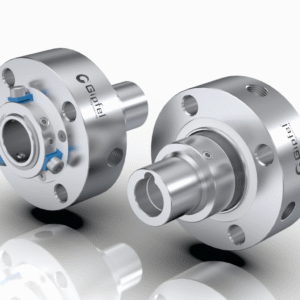
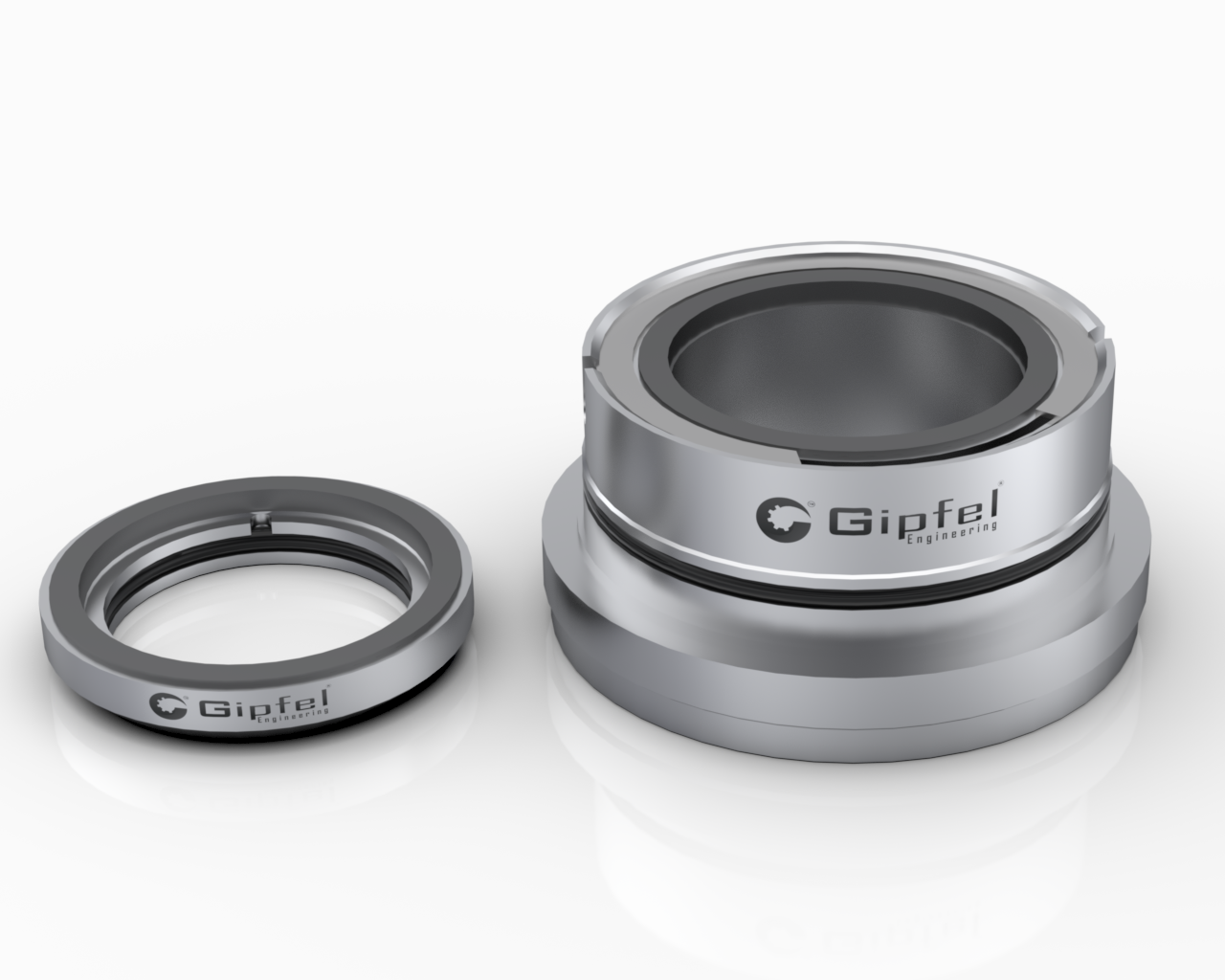
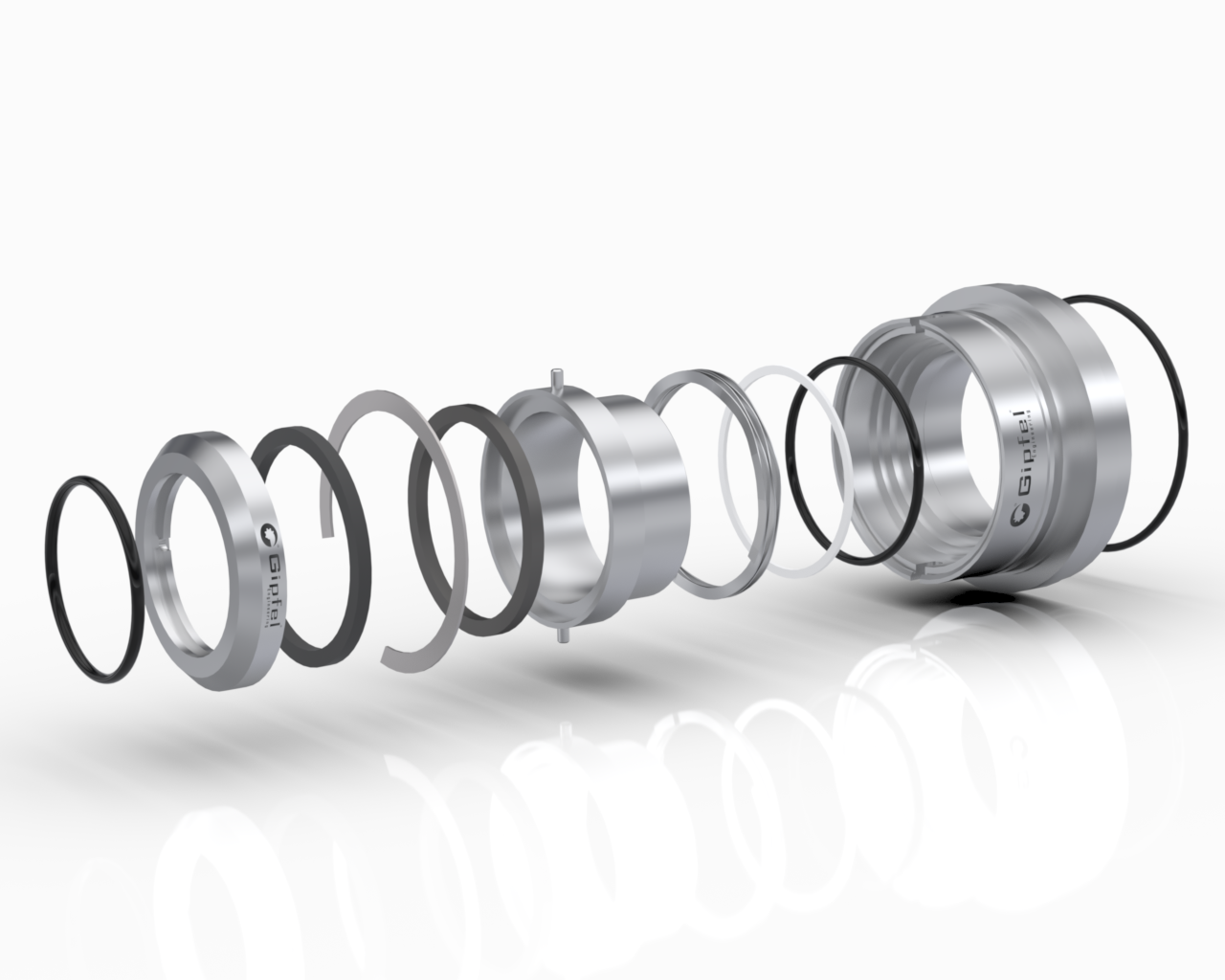
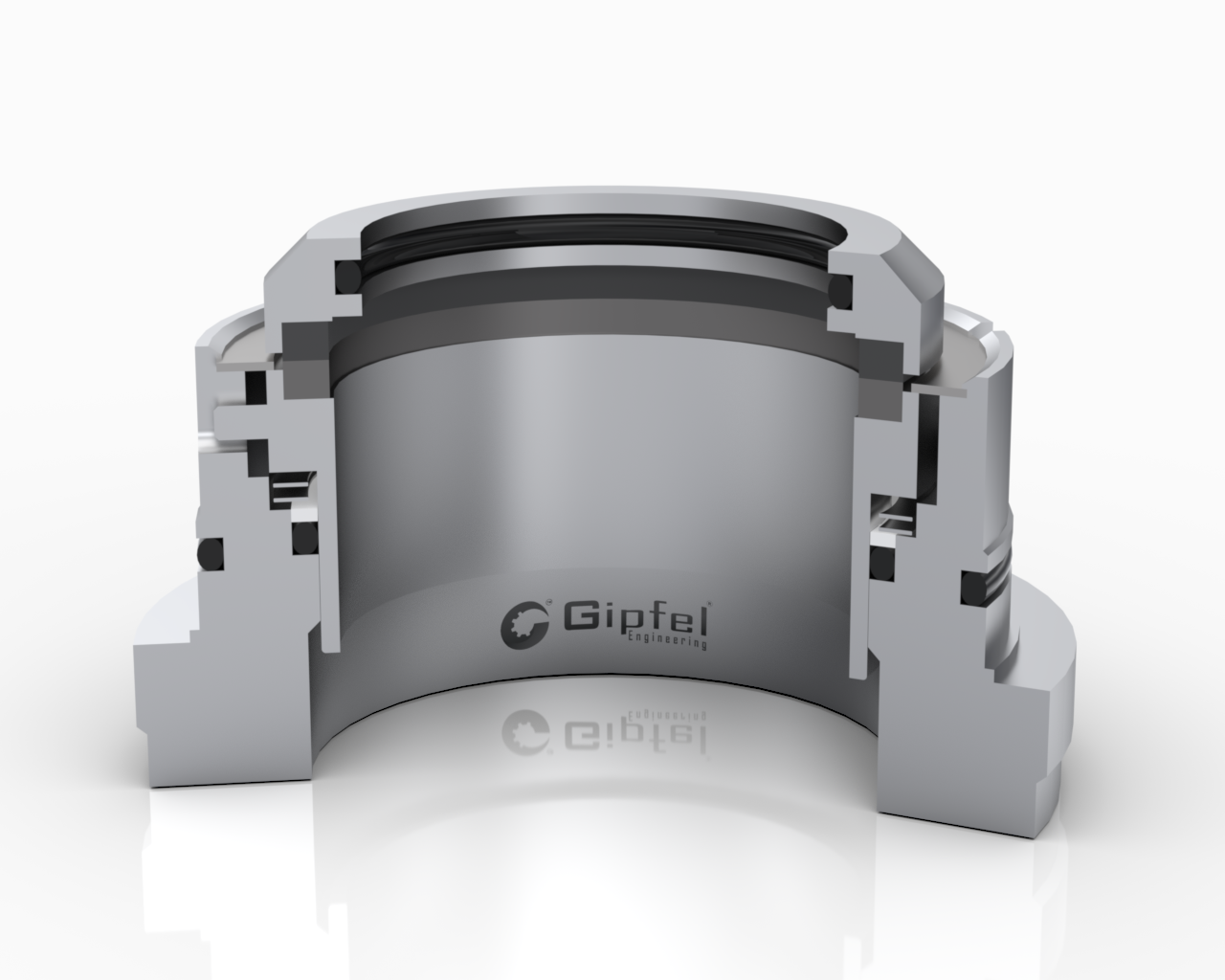
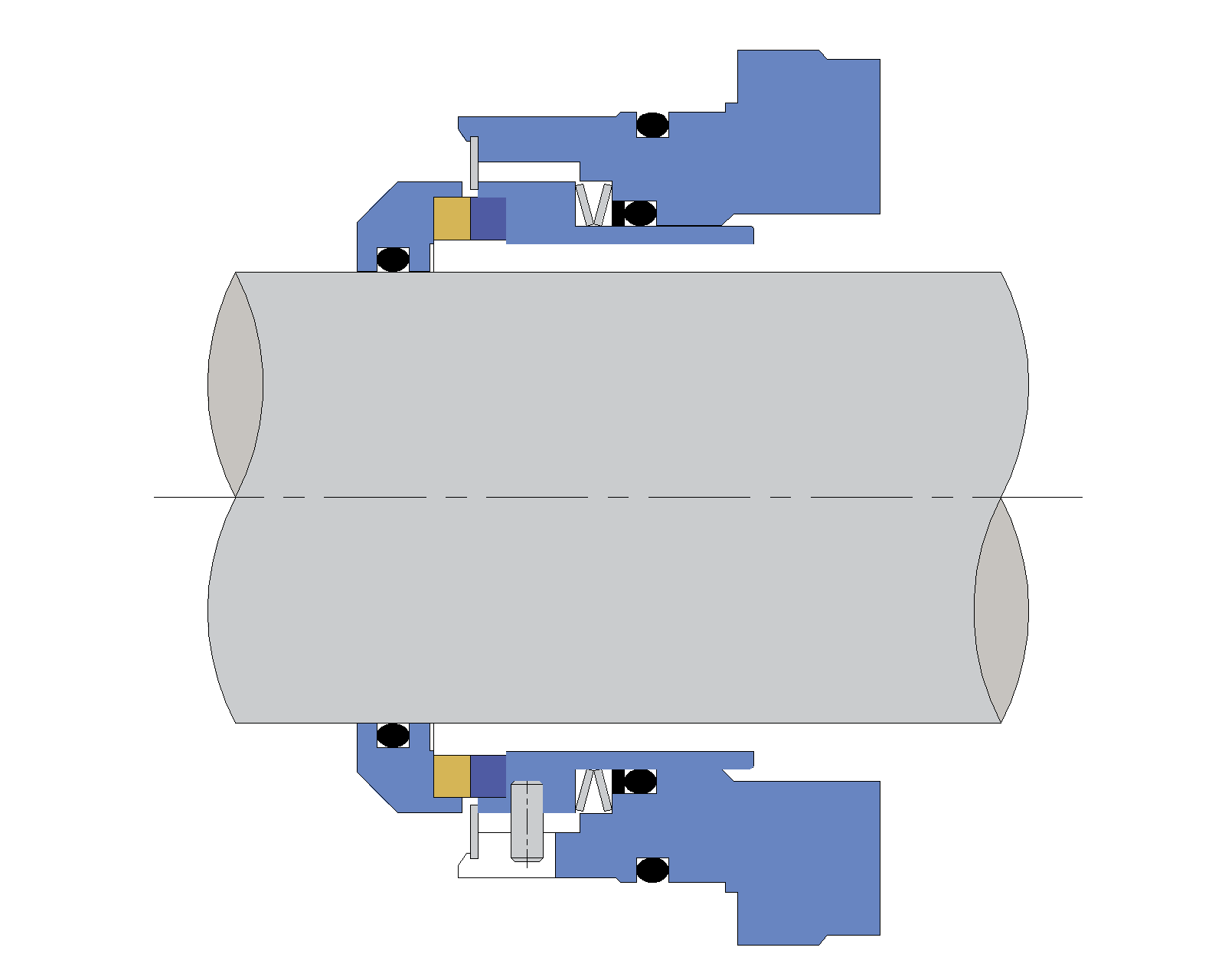
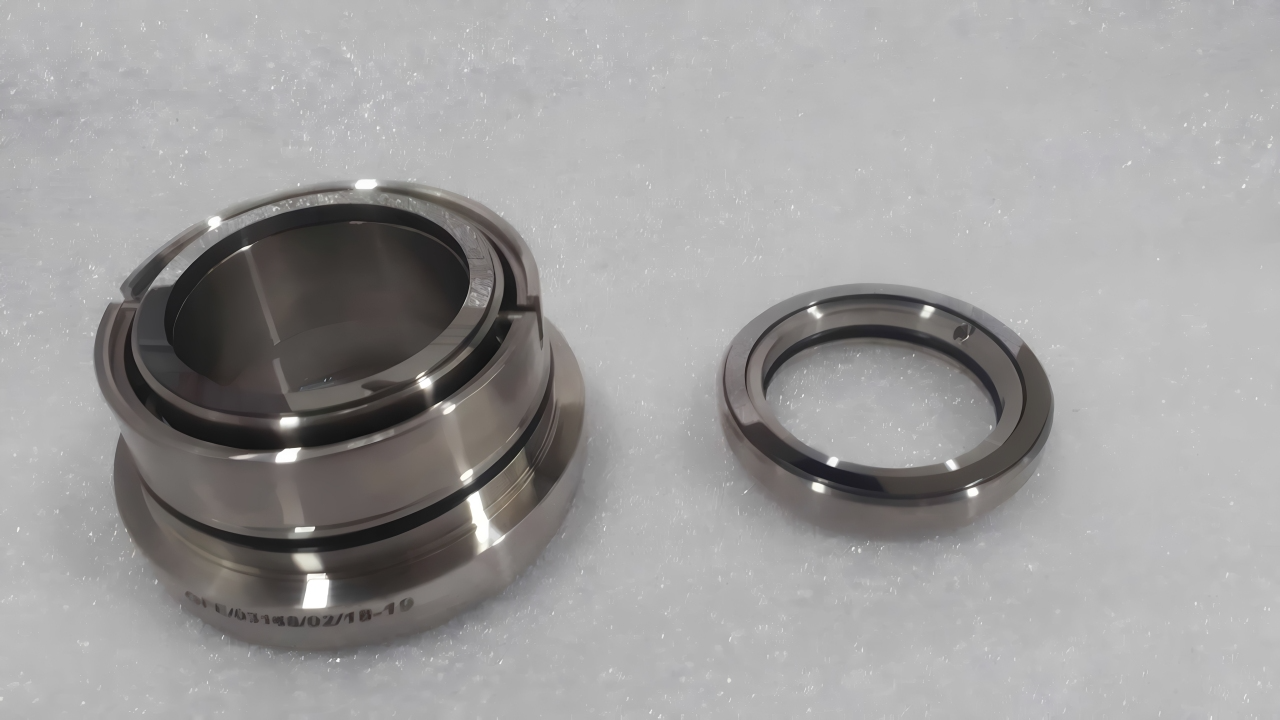
The SSC690 is a single, semi-cartridge, wave-spring mechanical seal engineered specifically for abrasive slurries and dirty water duties in HDD rotary joints and swivels. Supplied as a factory-assembled, pre-set cartridge, it minimizes installation errors and ensures repeatable performance under vibration, pressure transients, and angular or radial misalignment. The compact wave-spring arrangement reduces axial space requirements, making the seal well-suited to confined rotary joint envelopes and compact equipment layouts. Hydraulically balanced geometry, in combination with hard, slurry-resistant face materials, provides controlled face loading, reduced heat generation, and extended seal life in highly erosive and contaminated fluid environments.
In horizontal directional drilling (HDD) applications, the SSC690 mechanical seal is installed in the rotary joint or swivel that transfers drilling fluid while the drill string rotates, providing reliable sealing under fluctuating pressure, vibration, and shaft misalignment. The hydraulically balanced, heavy-duty design, combined with slurry-duty seal faces and robust spring loading, maintains stable face contact and maximizes service life in demanding trenchless construction operations such as road-crossing cable ducts, pipe jacking, and other HDD installations where reliability and rapid seal replacement are critical.
Key Features
- Factory assembled and pressure tested unit for reliability
- Quick replacement capability is critical for HDD field operations
- Bi-directional operation independent of shaft rotation direction
- Non-clogging construction suitable for slurry and solids-laden fluids
- Robust construction to withstand vibration, misalignment, and shock loads
- Single semi-cartridge design for easy installation and reduced setting errors
- Hydraulically balanced seal for improved stability under fluctuating pressure
- Wave spring technology for compact axial length and consistent face loading
Service Overview
| Parameter | Value |
|---|---|
| Equipment | HDD rotary joints/swivels |
| Fluid | Drilling slurry, dirty water, low solids suspensions |
| Service Nature | Abrasive, erosive, intermittent solids |
| Operating Mode | Continuous with pressure fluctuations |
| Installation | Semi-cartridge, pre-set unit |
Specifications & Operating Limits
| Parameter | Min | Max | Notes |
|---|---|---|---|
| Shaft Size | 20 mm / 0.750” | 100 mm / 4.000” | Metric and inch sizes |
| Pressure | — | 12 bar (174 psi) | HDD slurry service |
| Temperature | -50°C (-58°F) | +180°C (+356°F) | Depends on elastomer selection |
| Speed | — | 2900 rpm | Application dependent |
Materials of Construction
Seal face pairs (standard pair: silicon carbide vs silicon carbide)
| Pair | Face grades offered |
|---|---|
| Carbon vs silicon carbide | Resin-impregnated or antimony-impregnated carbon graphite vs sintered or reaction-bonded silicon carbide |
| Carbon vs tungsten carbide | Resin-impregnated or antimony-impregnated carbon graphite vs cobalt-bound or nickel-bound tungsten carbide |
| Silicon carbide vs silicon carbide | Sintered or reaction-bonded silicon carbide on both faces |
| Silicon carbide vs tungsten carbide | Sintered or reaction-bonded silicon carbide vs cobalt-bound or nickel-bound tungsten carbide |
| Tungsten carbide vs tungsten carbide | Cobalt-bound or nickel-bound tungsten carbide on both faces |
| Component | Standard | Options |
|---|---|---|
| Elastomers | FKM | PTFE |
| Metal parts | SS 304; SS 316 | Hastelloy® C-276; Alloy 20; Titanium; Duplex SS |
| Springs | SS 316 | Hastelloy® C; Alloy Steel |
- Faces: hard-on-hard pairs for abrasive or solids-laden services; carbon-based pairs for clean, lubricating fluids.
- Metals: selected by corrosion level, chloride content and temperature.
Hastelloy® is a registered trademark of their respective owners.
Applications
- Construction and mining equipment
- Pipe jacking and trenchless installations
- Horizontal Directional Drilling (HDD) rigs
- Rotary joints and swivels handling drilling fluids
- Slurry pumps and abrasive media transfer systems
- Crystallization processes and low solids suspensions
Selection Guidance
- Ensure adequate flushing or dilution to prevent solids packing at seal faces.
- Face selection should prioritize SiC vs SiC or SiC vs TC for maximum abrasion resistance.
- For high solids or critical emission control, evaluation for dual seal (API 682 Arrangement 2/3) is advised.
- Recommended for moderate-pressure slurry services where API Plan 11 or external flush (Plan 32) may be considered, depending on solids concentration.
Recommended API Plans (Single Seal)
| Plan | Purpose | Typical use |
|---|---|---|
| Plan 11 | Product recirculation to the seal faces | Clean services |
| Plan 21 | Recirculation through a cooler | Hot services |
| Plan 23 | Internal circulation with pumping ring and cooler | Hot services needing more efficient cooling |
| Plan 32 | External clean flush to the faces | Dirty or slurry services |
| Plan 62 | Quench on the atmospheric side | Preventing icing or crystallisation |
The plan is selected with the P&ID and project specification for each duty.
More Downloads
Frequently Asked Questions
- What shaft sizes does the SSC690 cover?
20 mm to 100 mm (0.750” to 4.000”). Metric and inch sizes are available. - What are the operating limits of the SSC690?
Up to 12 bar (174 psi); -50°C to +180°C (-58°F to +356°F), depending on elastomer selection; and up to 2900 rpm. These limits are not simultaneous. - What is the SSC690?
The SSC690 is a single, semi-cartridge, wave-spring mechanical seal engineered specifically for abrasive slurries and dirty water duties in HDD rotary joints and swivels. - Which API plans suit the SSC690?
Plans 11, 21, 23, 32 and 62, selected by duty: 11 for clean services, 21 and 23 for hot services, 32 for dirty or slurry services and 62 as an atmospheric-side quench. - Which seal face materials are available?
The standard pair is silicon carbide vs silicon carbide. Also offered: carbon vs silicon carbide, carbon vs tungsten carbide, silicon carbide vs tungsten carbide and tungsten carbide vs tungsten carbide. - Which elastomers and metals are available?
Elastomers: FKM as standard, with PTFE as options. Metal parts: SS 304 or SS 316 as standard, with Hastelloy® C-276, Alloy 20, Titanium or Duplex SS as options. - Does the SSC690 need on-site setting?
No. It is supplied as a factory-assembled unit with preset working length, which reduces installation errors and maintenance time. - Does the SSC690 work in both directions of rotation?
Yes. It operates independently of the direction of shaft rotation. - Where is the SSC690 used?
Construction and mining equipment; Pipe jacking and trenchless installations; Horizontal Directional Drilling (HDD) rigs; Rotary joints and swivels handling drilling fluids; Slurry pumps and abrasive media transfer systems; Crystallization processes and low solids suspensions.