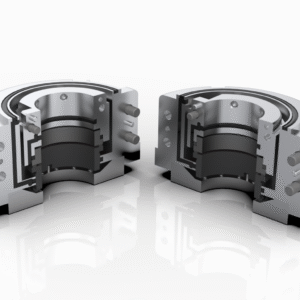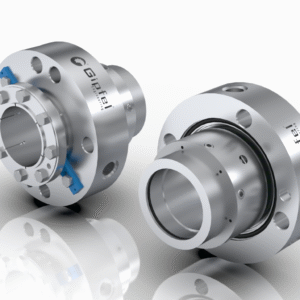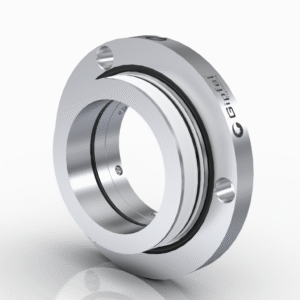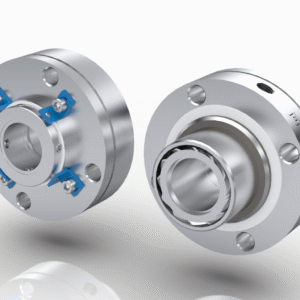
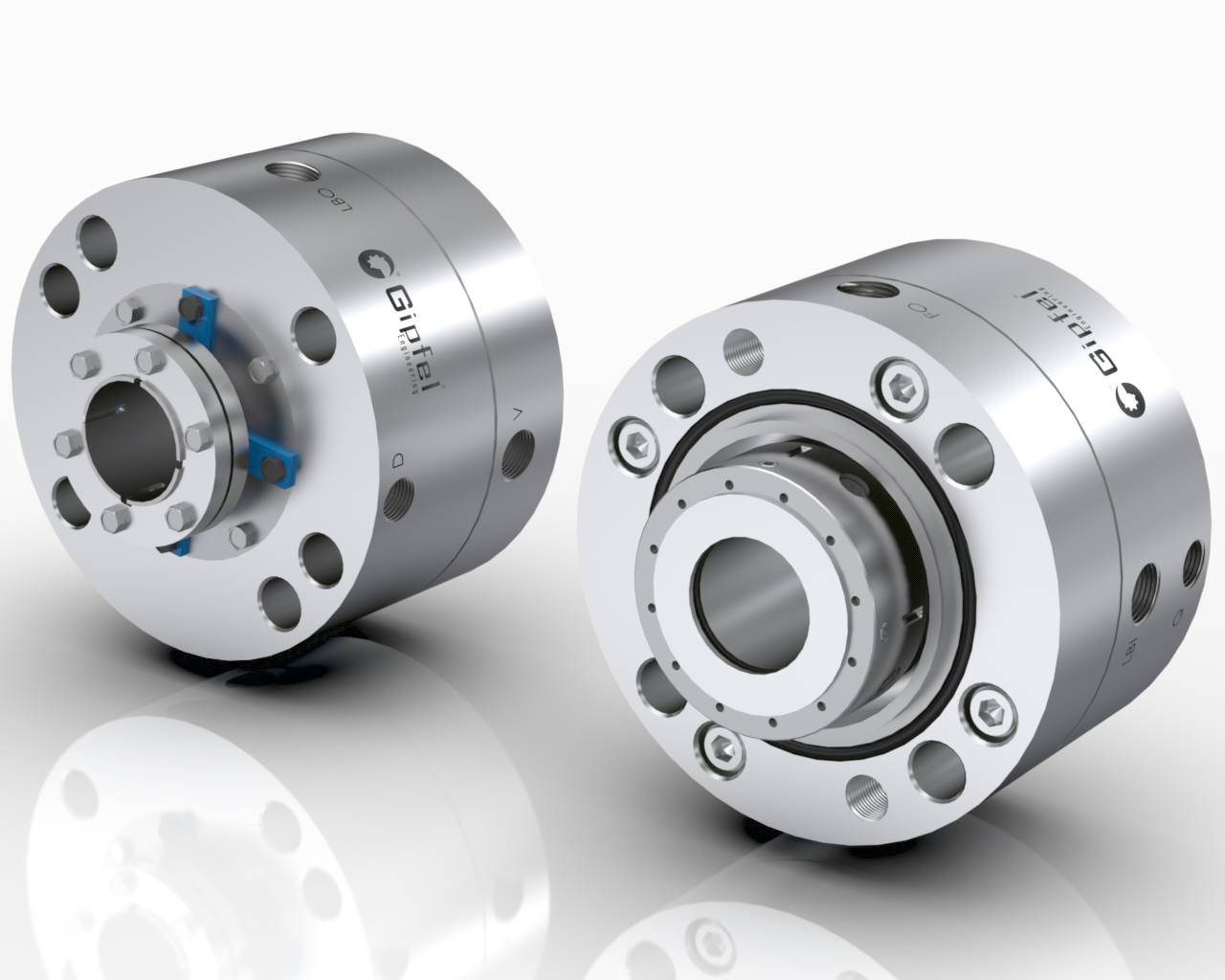
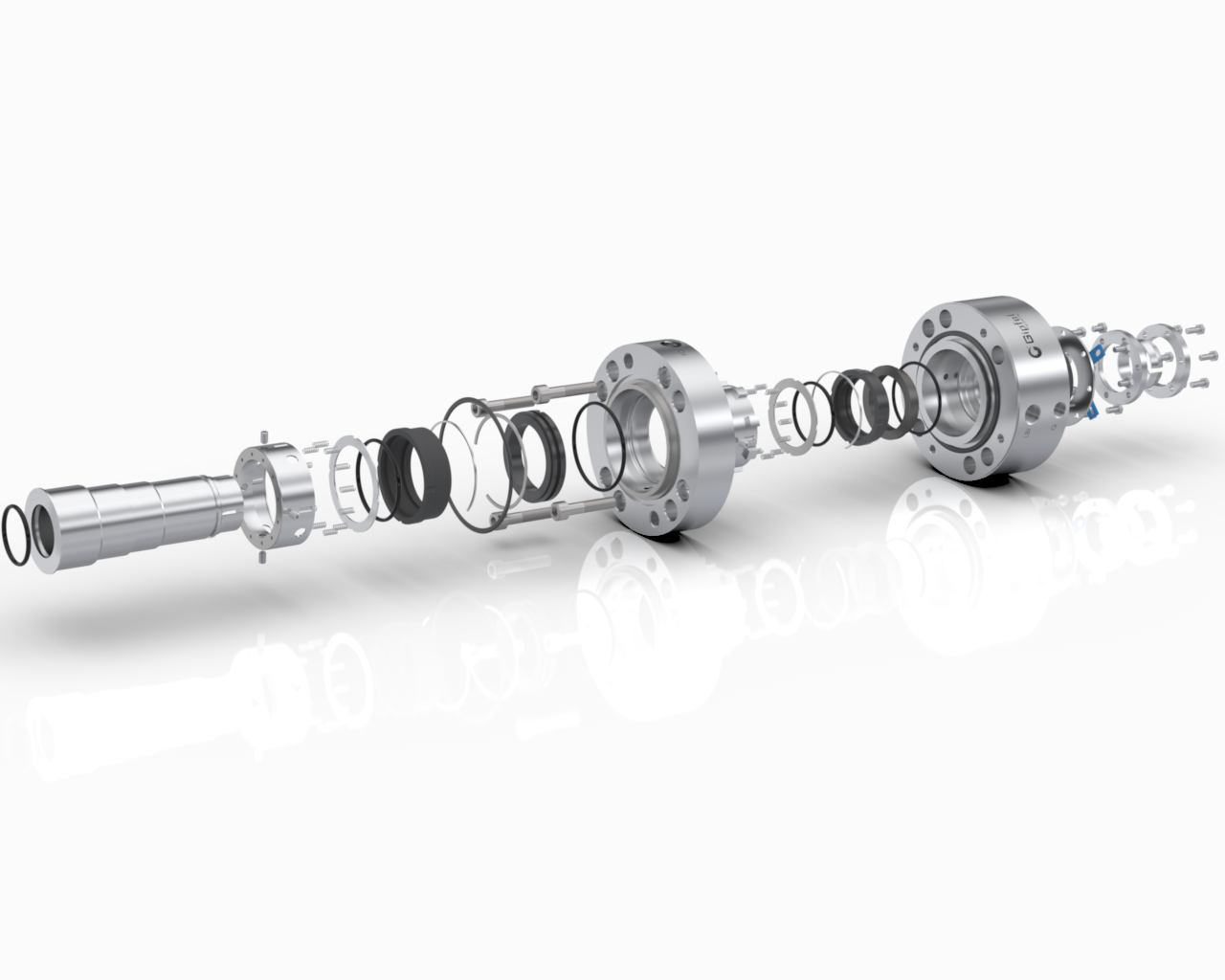
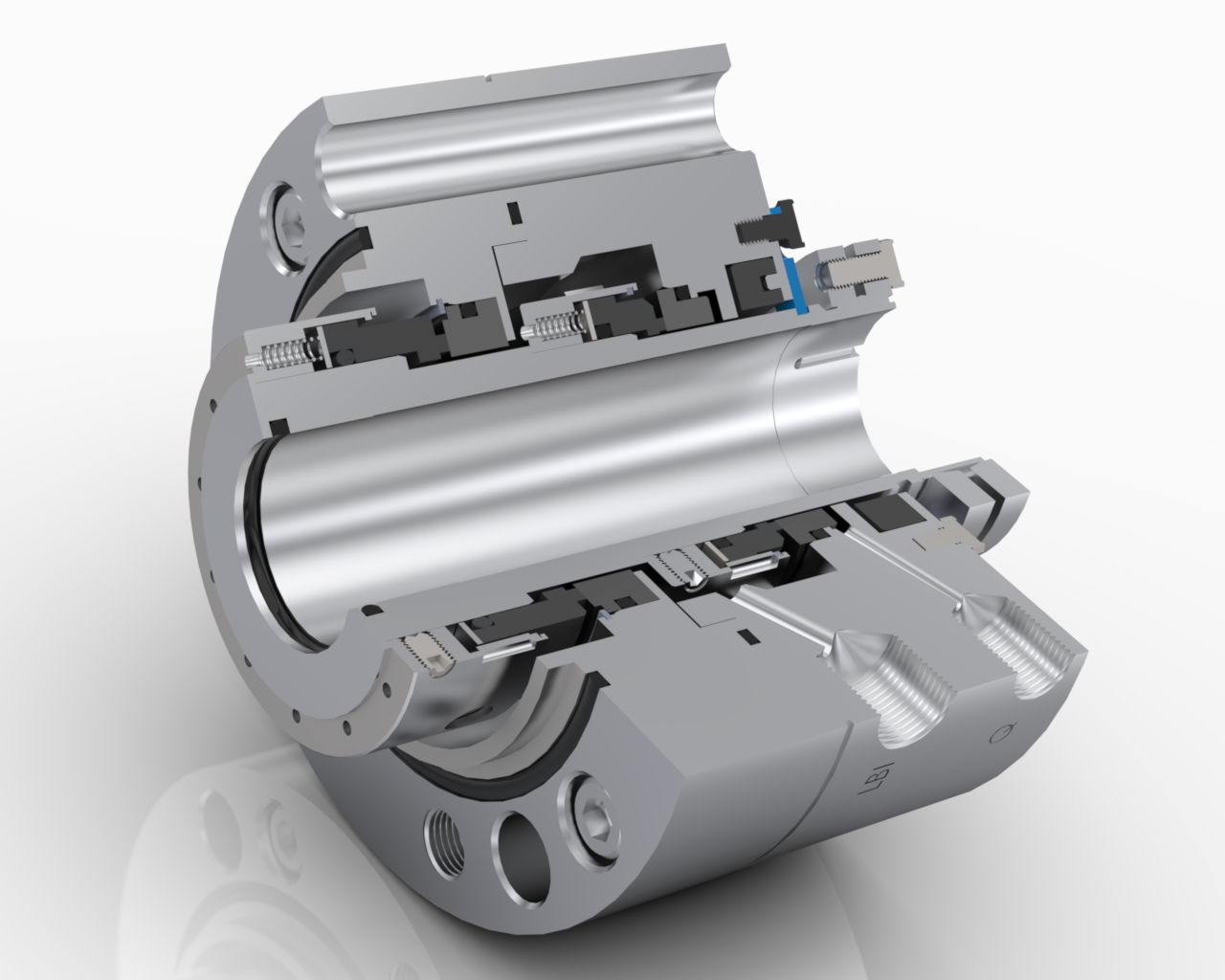
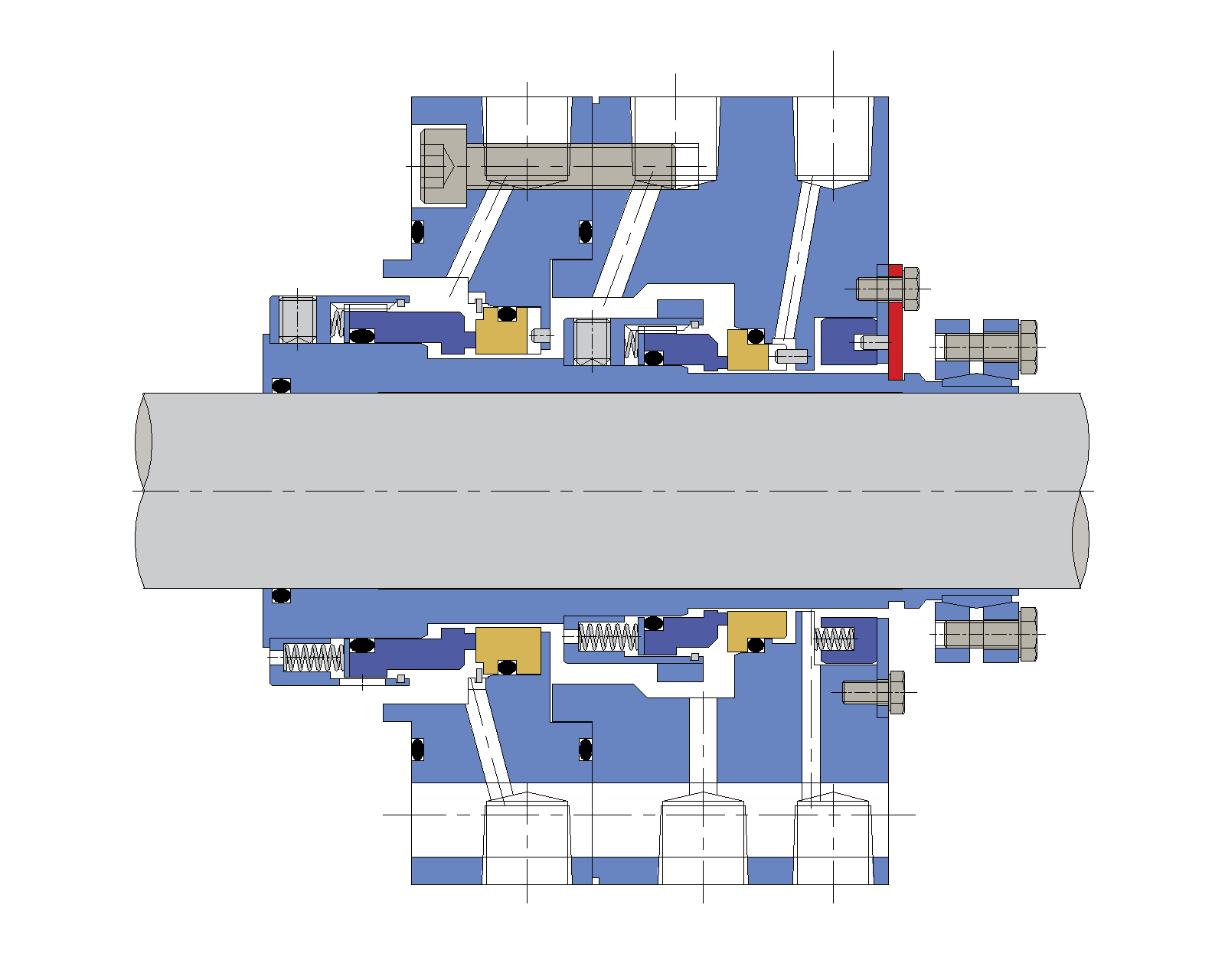
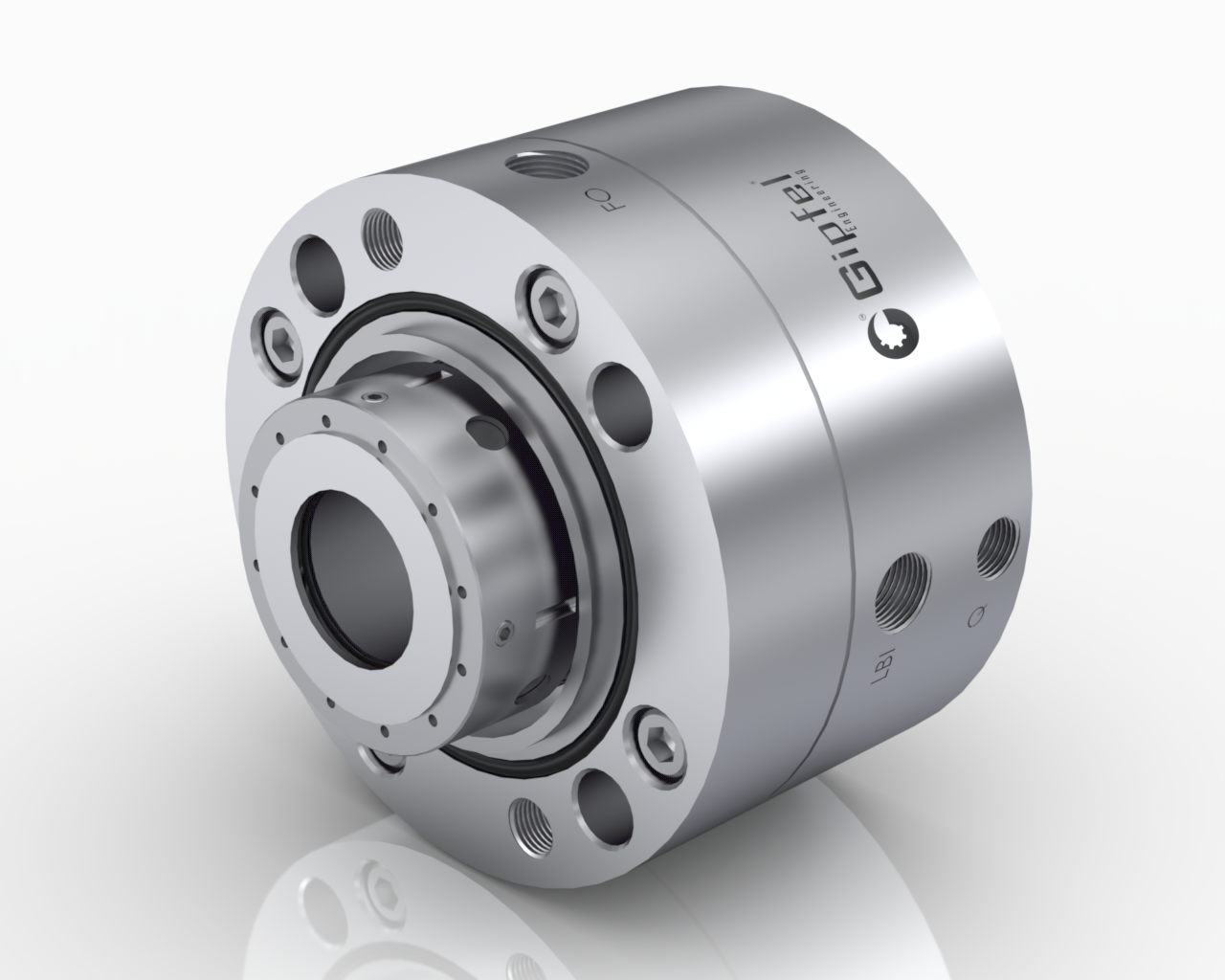
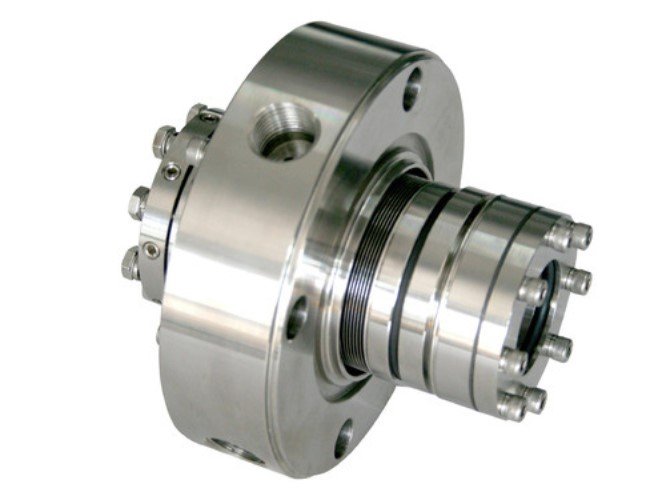
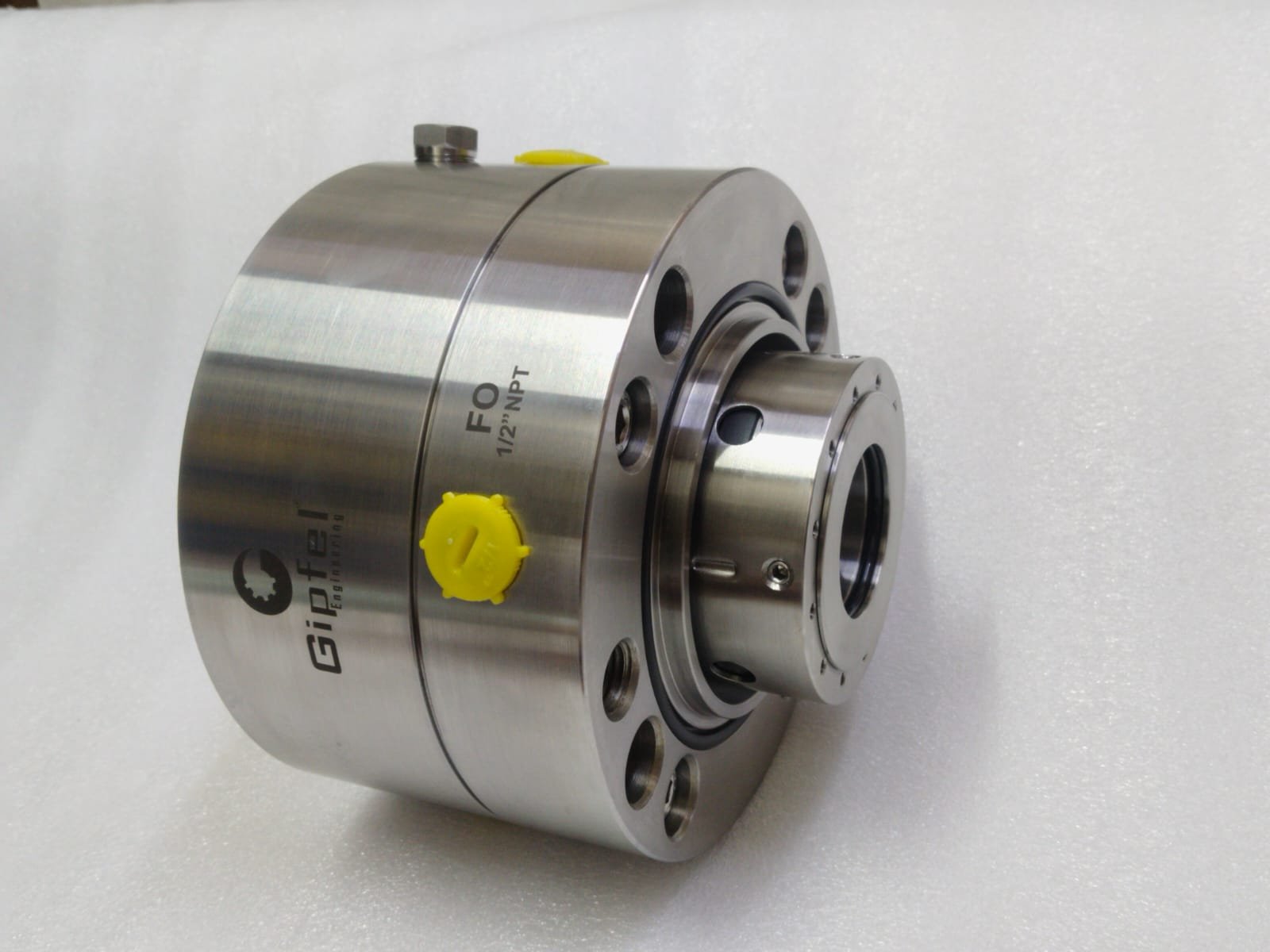
API 682 mechanical seals are precision-engineered sealing solutions designed to meet the stringent operational, safety, and environmental demands of rotating equipment in oil & gas, petrochemical, chemical processing, and power generation industries. Manufactured in full compliance with the American Petroleum Institute Standard 682, these seals provide industry-standard performance, interchangeability, and regulatory adherence across global applications.
Built with a strong emphasis on standardization, modularity, and long-term durability, API 682-compliant mechanical seals deliver:
- Superior leakage control in hazardous and high-risk services
- Extended equipment uptime through stable, repeatable performance
- Minimized maintenance frequency due to robust construction and proven reliability
Their robust design and proven track record make them the preferred choice for mission-critical process pumps where seal failure is not acceptable, particularly in safety- and environment-sensitive installations.
The API 682 Mechanical Seal – Model API 682 is an engineered cartridge mechanical seal designed for demanding rotating equipment where leakage control, operational safety, and environmental protection are essential. Consistent with API 682 sealing principles, the design can be configured as single, dual pressurized, or dual unpressurized arrangements, depending on fluid volatility, toxicity, vapor pressure, temperature, and site emission requirements.
This seal is suitable for petrochemical, oil and gas, refining, chemical processing, LPG, and power generation services, particularly on API 610 / ISO 13709 centrifugal process pumps. Its hydraulically balanced seal geometry, robust metallic hardware, precision-lapped seal faces, and application-specific elastomers or secondary sealing elements ensure stable performance when handling hazardous liquids, light and heavy hydrocarbons, high-temperature process fluids, and other critical media.
By combining standardized design with configurable sealing arrangements, the API 682 mechanical seal supports reliable, emissions-controlled operation in the most demanding process-pump installations.
Key Features
- Engineered for critical process pumps in continuous-duty refinery, chemical, LPG, and power plant installations, where seal failure is not acceptable.
- Global compatibility with both metric and imperial (inch) sizes, suitable for integration with a wide range of international equipment and pump standards.
- Compatible with API piping plans such as Plan 11, 21, 23, 32, 52, 53A/B/C, and 54, enabling standardized flush, quench, barrier, and cooling arrangements.
- Single, tandem, and double-seal configurations (Arrangement 1, 2, and 3) available to suit different emissions, containment, and reliability requirements.
- Quick installation and maintenance access thanks to a simplified, cartridge-style layout that reduces equipment downtime and maintenance labour requirements.
- Balanced seal geometry reduces heat generation and stabilizes face loading under pressure transients and thermal cycling, improving reliability and face life.
- API 682-oriented cartridge construction for reliable installation, reduced setting errors, and consistent field performance across a wide range of process pumps.
- Rotary and stationary metal-bellows options for high-temperature and corrosive services, providing flexibility based on application severity and operating conditions.
- Heavy-duty metallurgy options for sour service, chloride-containing fluids, hydrocarbons, and high-temperature applications, ensuring corrosion and erosion resistance.
- Factory-assembled and performance-tested units delivered with verified pressure integrity and compliance with API 682 requirements, ensuring immediate field reliability.
- High-integrity leakage control for hazardous, flammable, volatile, and environmentally sensitive process fluids, supporting emissions-controlled and safety-critical service.
- Hydraulically balanced seal faces reduce axial face load to minimize wear, lower heat generation, and extend operational seal life under high-differential-pressure conditions.
- Integrated flush and quench connections fully compatible with API 682 piping plans (for example Plan 11, 32, 52, 53), enabling effective cooling, cleaning, and environmental control.
- Non-directional (bi-directional) operation allows the seal to function reliably in both clockwise and counter-clockwise shaft rotation, simplifying installation and spare-seal management.
- Flexible spring configurations including rotary, stationary, and multiple-spring designs to accommodate shaft movement, pressure variation, and ensure even face loading for consistent sealing.
- Suitable for API 682 Category 1, 2, and 3 – Type A, B, and C designs, compliant with all major categories and types for deployment in light, moderate, and severe service conditions across critical industrial applications.
Service Overview
| Parameter | Value |
|---|---|
| Equipment | API 610 / ISO 13709 centrifugal process pumps, refinery pumps, petrochemical pumps, LPG transfer pumps, boiler feed and utility pumps |
| Fluid | LPG, light hydrocarbons, heavy hydrocarbons, hot oil, solvents, chemicals, condensate, process water, and other critical process media |
| Service Nature | Hazardous, flammable, volatile, high-temperature, emission-sensitive, or environmentally controlled services |
| Operating Mode | Continuous-duty operation with pressure, temperature, and process variations |
Specifications & Operating Limits
| Parameter | Min | Max | Notes |
|---|---|---|---|
| Shaft Size | 20 mm / 0.750” | 150 mm / 6.000” | Larger engineered sizes available on request |
| Pressure | Vacuum / 0 bar (0 psi) | 35 bar (508 psi) | Higher-pressure engineered designs available based on arrangement and seal chamber limits |
| Temperature | -130°C (-202°F) | +400°C (+752°F) | Depends on elastomer, gasket, metal, and flush plan selection |
| Speed | — | 3600 rpm | Final rating depends on shaft size, balance ratio, face pair, and pump duty |
Materials of Construction
| Component | Standard | Options | Notes |
|---|---|---|---|
| Seal Faces | Carbon Graphite vs Silicon Carbide | Silicon Carbide vs Silicon Carbide, Tungsten Carbide, Antimony Carbon | Selected based on lubricity, abrasives, temperature, and vapor pressure |
| Secondary Seals | FKM / FKM | AFLAS, FFKM, PTFE, Flexible Graphite | Selected for chemical compatibility and temperature exposure |
| Metal Parts | SS 316 / SS 316L | Duplex SS, Super Duplex, Alloy 20, Hastelloy® C, Inconel® | For chloride, sour, acidic, or high-corrosion services |
| Springs & Drive Parts | SS 316 | Hastelloy® C, Inconel®, Alloy Steel | Isolated or non-clogging spring designs available depending on service |
Hastelloy® and Inconel® are registered trademarks of their respective owners.
Applications
- Petrochemical and chemical process pumps
- API 610 / ISO 13709 process pump installations
- LPG plants and volatile hydrocarbon transfer systems
- Oil and gas production, transfer, and utility services
- Hazardous, flammable, toxic, or environmentally regulated fluids
- Power generation auxiliaries and high-temperature liquid services
- Refinery hydrocarbon, hot oil, naphtha, diesel, and condensate pumps
- Services requiring API 682-style seal arrangements and API piping plans
Recommended API Plans
| Plan | How it works | Typical use |
|---|---|---|
| API Plan 21 | Product from pump discharge through a restriction orifice and cooler into the seal chamber | Hot, volatile services needing seal-chamber cooling |
| API Plan 23 | Closed-loop recirculation of seal-chamber fluid by a pumping ring through a cooler | Hot water, boiler feed water, hot hydrocarbons |
| API Plan 32 | Injection of clean, compatible liquid from an external source into the seal chamber | Dirty, abrasive or polymerizing process fluids |
| API Plan 52 | Unpressurized buffer liquid from an external reservoir for dual seals | Flashing or hazardous services where some process leakage to the buffer is acceptable |
| API Plan 53A | Barrier liquid pressurized by gas in a reservoir, circulated by a pumping ring | Hazardous, toxic or poorly lubricating fluids requiring positive containment |
| API Plan 54 | Barrier liquid pressurized and circulated by an external system | High-pressure, high-temperature or multi-seal duties needing forced circulation |
API 682 defines standard piping plans that control the environment around the seal faces. Gipfel designs and manufactures the following seal support systems for use with API 682 mechanical seals:
More Downloads
Frequently Asked Questions
- What is the API 682 Mechanical Seal?
API 682 mechanical seals are precision-engineered sealing solutions designed to meet the stringent operational, safety, and environmental demands of rotating equipment in oil & gas, petrochemical, chemical processing, and power generation industries. - What are the operating limits of the API 682 Mechanical Seal?
Shaft size 20 mm / 0.750” to 150 mm / 6.000”; pressure vacuum / 0 bar (0 psi) to 35 bar (508 psi); temperature -130°C (-202°F) to +400°C (+752°F); speed up to 3600 rpm. These limits are not simultaneous. - Which materials are used in the API 682 Mechanical Seal?
Seal Faces: Carbon Graphite vs Silicon Carbide; Secondary Seals: FKM / FKM; Metal Parts: SS 316 / SS 316L. - Which media can the API 682 Mechanical Seal handle?
LPG, light hydrocarbons, heavy hydrocarbons, hot oil, solvents, chemicals, condensate, process water, and other critical process media. - Which equipment is the API 682 Mechanical Seal used on?
API 610 / ISO 13709 centrifugal process pumps, refinery pumps, petrochemical pumps, LPG transfer pumps, boiler feed and utility pumps. - Which API plans suit the API 682 Mechanical Seal?
API Plan 21, API Plan 23, API Plan 32, API Plan 52, API Plan 53A and API Plan 54, selected by duty and arrangement. - Where is the API 682 Mechanical Seal used?
Petrochemical and chemical process pumps; API 610 / ISO 13709 process pump installations; Oil and gas production, transfer, and utility services; LPG plants and volatile hydrocarbon transfer systems; Hazardous, flammable, toxic, or environmentally regulated fluids.