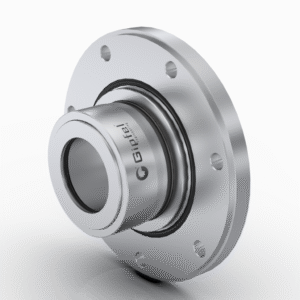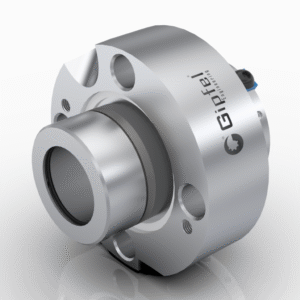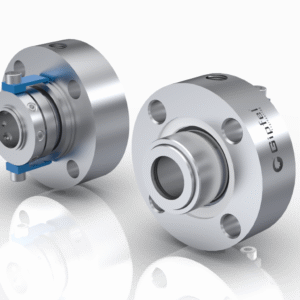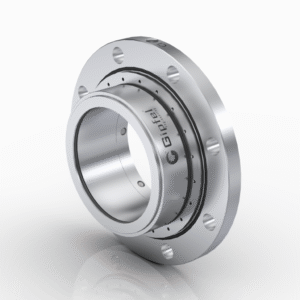
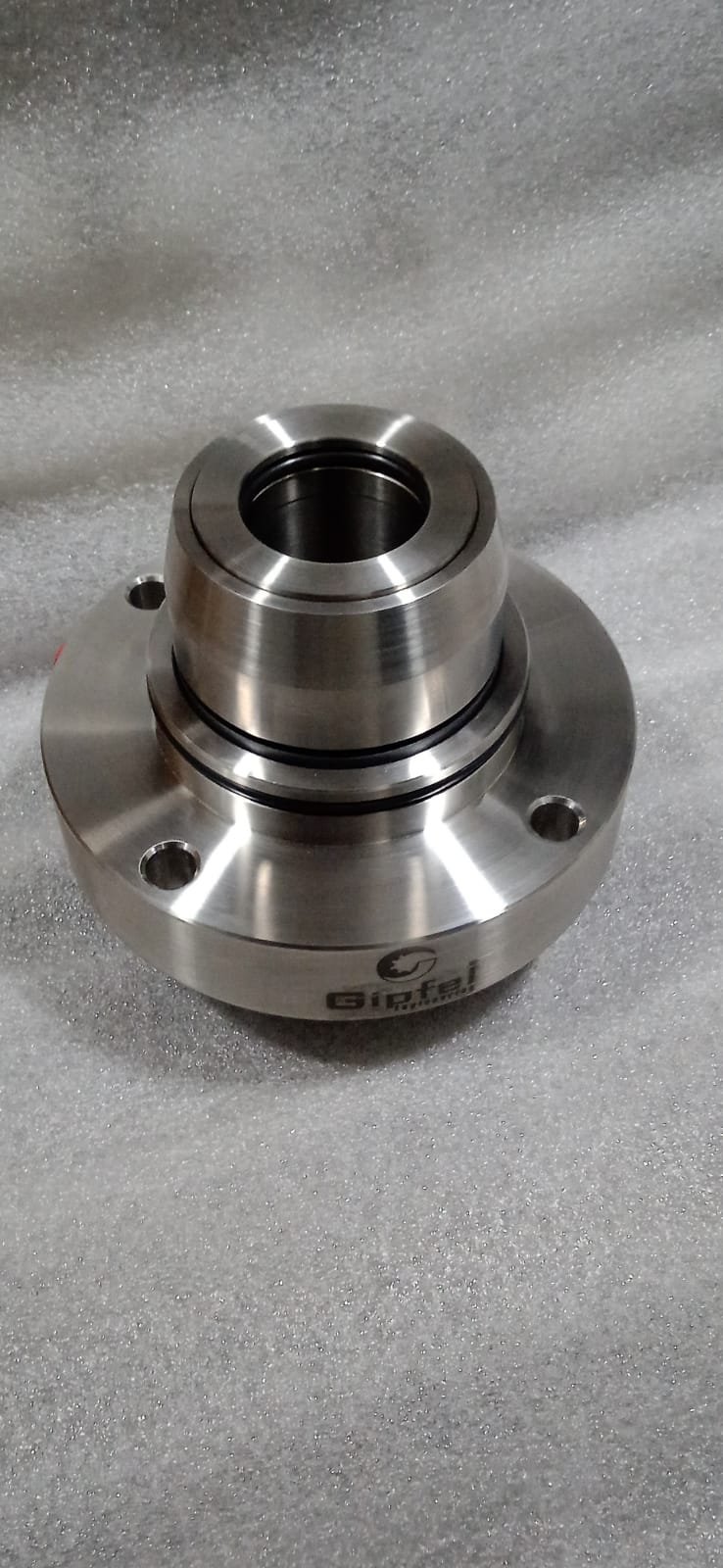
Product overview;
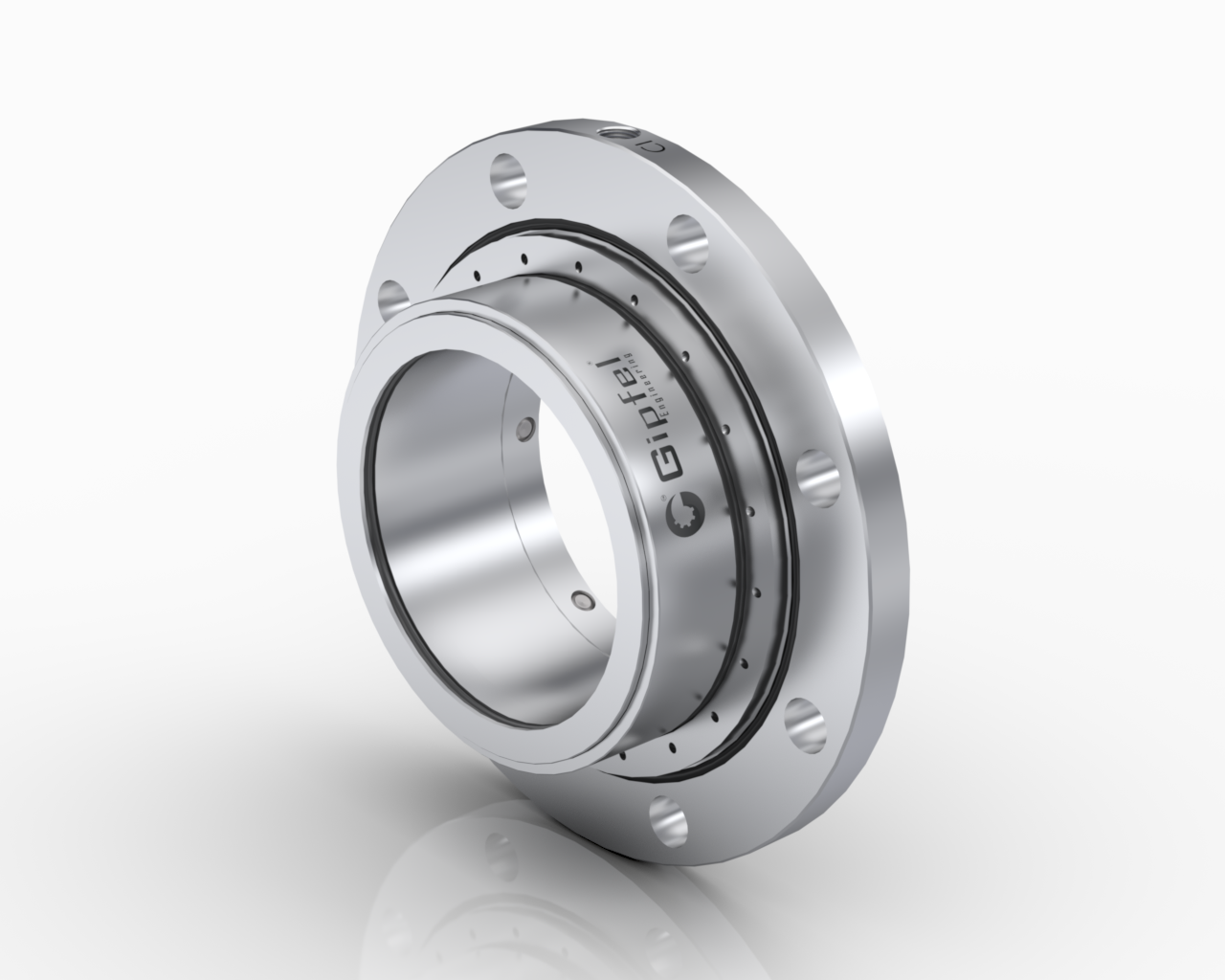
The MS840 is a specialized medium-duty slurry mechanical seal designed to prevent fluid leakage in medium-duty slurry environments. Slurries consist of solid particles suspended in a liquid and are often abrasive and corrosive. The MS840 is engineered to withstand these harsh conditions and offers a more robust solution where conventional light-duty seals are prone to clogging, face damage, or premature leakage.
The MS840 Medium Duty Slurry Mechanical Seal is a robust rotary spring mechanical seal specifically engineered for abrasive, solids-laden, and viscous process fluids. Its rotary spring configuration ensures consistent axial loading on the seal faces, promoting stable operation in slurry pumps, mixers, agitators, and other rotating equipment exposed to intermittent solids, crystallizing media, and fluctuating pressures.
Designed for medium-duty slurry service, the MS840 is suitable for industries handling mineral slurries, pigments, fertilizers, wastewater, molasses, corn slurry, FGD slurry, phosphate slurry, potash, bauxite, iron ore, tailings, and chemically aggressive process liquids. Recommended hard-face combinations such as silicon carbide vs. tungsten carbide provide excellent abrasion resistance, while corrosion‑resistant hardware and compatible elastomers allow configuration for a wide range of services including chemical processing, mining, refining, food, pharmaceuticals, and power plants.
Key and technical features;
- Non‑clogging design emphasis helps reduce spring and cavity fouling in dirty or particle‑laden media, improving reliability in abrasive duty.
- Balanced sealing performance handles moderate pressure fluctuations and typical pump duty cycles without abrupt loss of sealing integrity.
- Broad equipment suitability covers slurry pumps, process pumps, mixers, agitators, and other rotary process equipment handling abrasive or hazardous liquids.
- Rotary spring configuration provides reliable axial face loading in dynamic slurry service, maintaining consistent seal face pressure under vibration and shaft movement.
- Wide material flexibility accommodates chemical, mining, wastewater, food, pharmaceutical, and refinery applications through appropriate face, elastomer, and metallic choices.
- Medium-duty slurry capability is engineered for abrasive, viscous, crystallizing, and solids‑bearing process fluids where light‑duty seals are prone to clogging or premature failure.
- Hard‑face compatibility supports material pairings such as silicon carbide (SiC), tungsten carbide (TC), and carbon‑based faces, selected according to slurry severity and abrasion level.
Components and design basis;
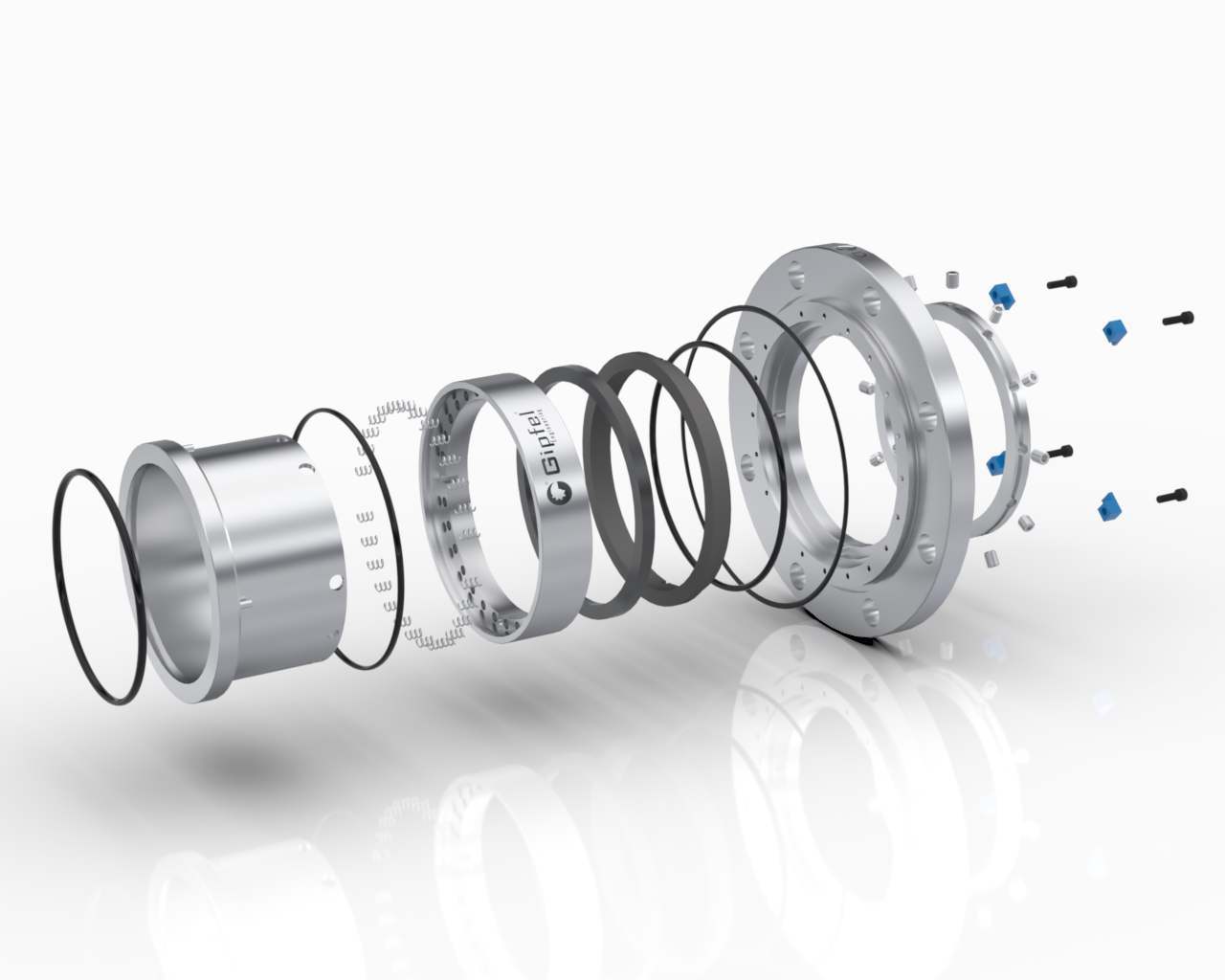
- Secondary sealing elements: Include O‑rings, elastomer seals, or flexible graphite gaskets that provide static and dynamic sealing and prevent slurry bypass around the primary faces.
- Springs and drive mechanism: Springs maintain the required contact force between the seal faces, while the drive mechanism transfers torque and allows adaptation of face pressure to specific operating conditions.
- Seal faces: The primary components that contact the slurry, typically made from durable materials such as silicon carbide or tungsten carbide to resist abrasion; faces are precisely lapped and polished to ensure a tight, low‑leakage seal.
- Seal housing: Encloses the faces and secondary elements and forms a protected environment for seal operation; commonly constructed from stainless steel or other corrosion‑resistant alloys to withstand both abrasive and corrosive slurries.
- Flushing and lubrication systems: In medium‑duty slurry applications with higher solids concentration and heat‑generation risk, flushing or lubrication systems may be integrated; they introduce a clean liquid or compatible lubricant between the faces for cooling, lubrication, and solids removal, extending seal life and reducing premature failure risk.
Durability & reliability;
- Hard‑face combinations provide high resistance to abrasion and chemical attack, extending operational life in harsh slurry environments.
- Vibration‑ and shock‑resistant design is engineered to withstand pump vibrations and process pulsations without compromising sealing performance.
- Wide elastomer compatibility supports materials such as Viton, EPDM, and FFKM to match process‑fluid compatibility and thermal‑chemical requirements.
- Robust metallic construction offers wetted components in materials such as Alloy 20, Hastelloy, or hard‑coated steel to resist corrosion and erosion in aggressive media.
- API piping plan compatibility (including Plans 32, 53A, 53B, etc.) supports standard industry arrangements for external flushing, barrier‑fluid pressurization, and thermal control where required.
Performance & efficiency;
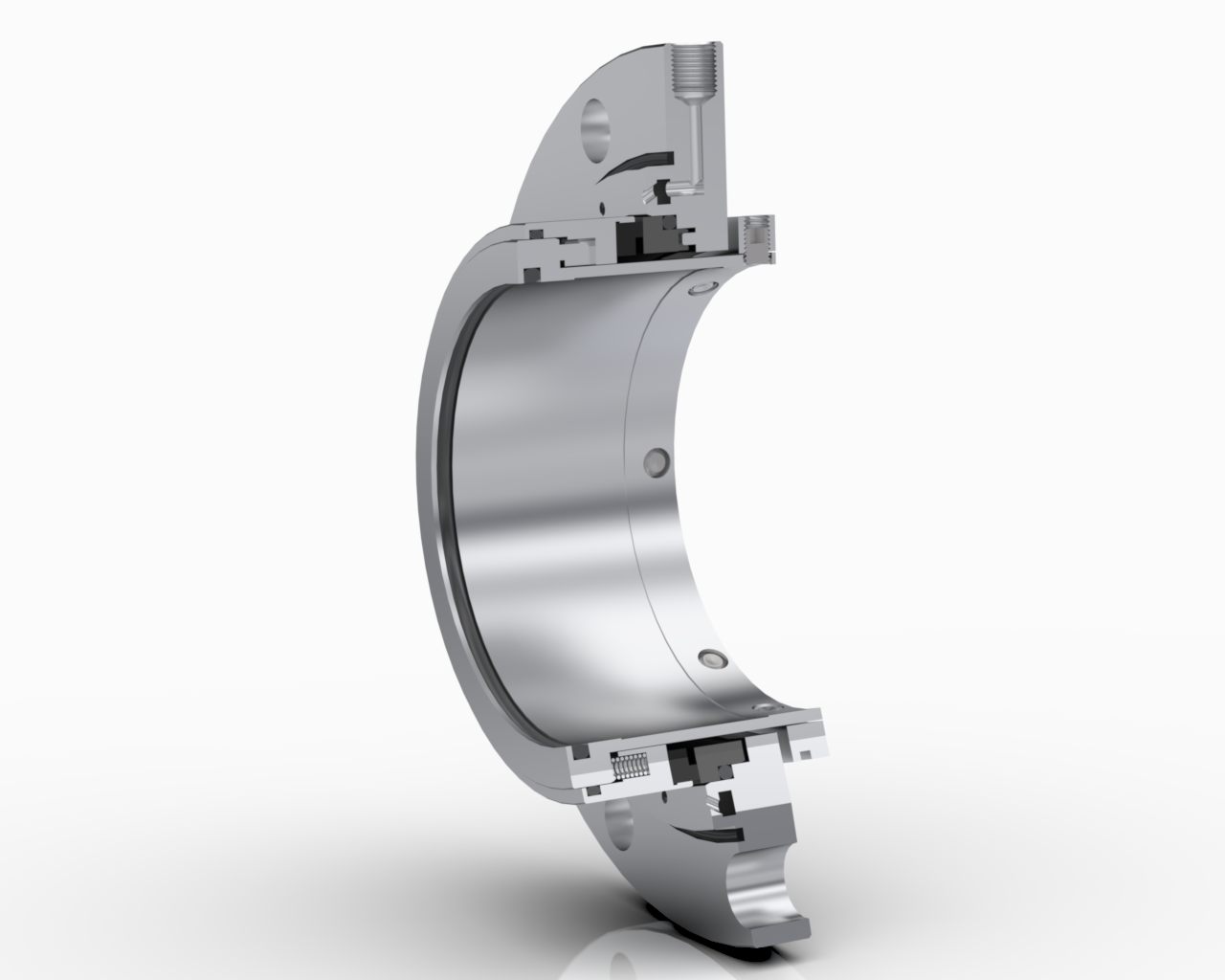
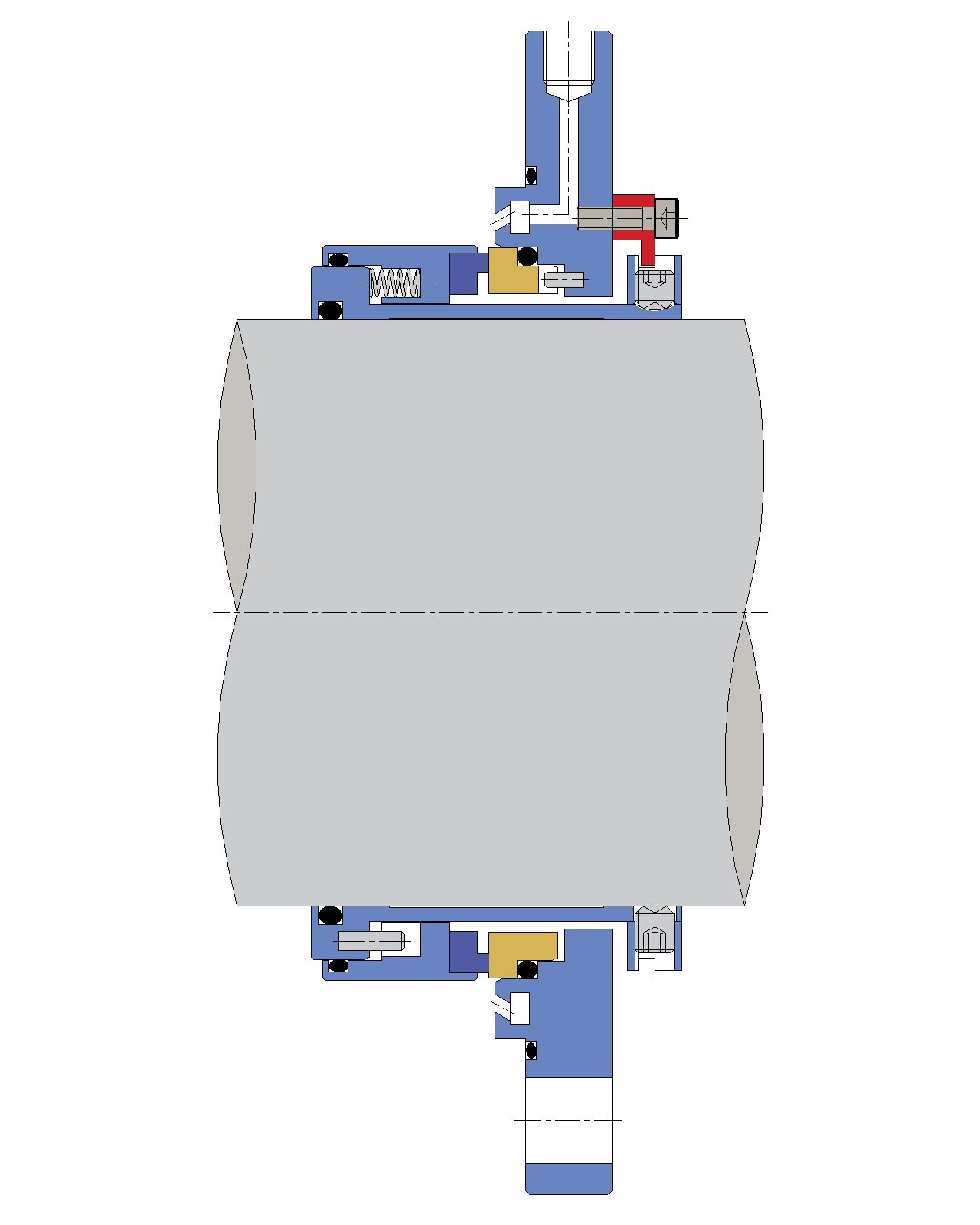
- Isolated springs are located outside the process fluid (non‑wetted area), reducing clogging by slurry particles and improving reliability and service life.
- Hydraulically balanced design reduces the closing force on the seal faces, lowering friction, heat generation, and wear; well suited to medium‑pressure, abrasive slurry services with fluctuating conditions.
- Multiple‑spring design ensures uniform face loading, improves stability under varying pressure and temperature, compensates for axial misalignment and face wear, and increases mean time between failures (MTBF).
- Single‑seal configuration is suitable for most medium‑duty slurry applications, offering a cost‑effective and easy‑to‑maintain solution; dual‑seal configurations may be recommended for extremely hazardous or high‑pressure services.
- Rotary spring configuration keeps springs rotating with the shaft, maintaining uniform face pressure even under vibration and axial movement—ideal for applications with limited space, challenging shaft dynamics, or layout‑driven design choices.
Installation & maintenance;
- Metric and inch sizes available provide global compatibility with equipment standards, improving flexibility across regional and international markets.
- Independent of direction of rotation allows use in equipment with unknown or reversing shaft rotation, reducing inventory variety and simplifying spare‑seal selection.
- Factory‑assembled and tested units ensure quality, reliability, and readiness for direct installation, with factory‑set tolerances maintained for consistent performance.
- Quick installation and easy removal are enabled by cartridge construction, which allows fast, error‑free installation and removal, significantly reducing maintenance time and plant downtime.
- Cartridge construction is a pre‑assembled, factory‑tested unit that ensures accurate concentricity and alignment—critical in abrasive applications—while eliminating field measurements and axial adjustments and minimizing installation errors.
Environmental & safety;
- Flushing, quenching, and draining connections support environmentally and operationally safer sealing:
- Flushing: Clears abrasive particles from the seal chamber, helping to protect the faces and extend seal life.
- Quenching: Controls temperature and helps prevent atmospheric crystallization or caking on the atmospheric side.
- Draining: Allows safe and clean fluid evacuation during maintenance, reducing contamination and unplanned downtime.
Service Overview;
| Parameter | Value |
| Equipment | Slurry pumps, process pumps, mixers, agitators, rotary equipment |
| Fluid | Abrasive slurry, crystallizing media, wastewater, molasses, mineral slurry, chemical slurry, FGD slurry, tailings |
| Service Nature | Medium-duty abrasive, erosive, viscous, solids-laden, hazardous, or crystallizing service |
| Operating Mode | Continuous or batch operation with moderate pressure and solids variation |
Specifications;
| Item | Min | Max | Typical/Notes |
| Size | 20 mm (0.750”) | 300 mm (12.000”) | Other sizes on request |
| Pressure | Vacuum / low pressure | 17 bar (250 psi) | Medium-duty slurry service |
| Temperature | -40°C (-40°F) | +220°C (+428°F) | Depends on elastomer and metallurgy |
| Speed | — | 3000 rpm | Application-dependent; verify for high solids and large shaft sizes |
Materials;
| Component | Standard Material | Optional Material | Comment |
| Seal Faces | Silicon Carbide / Silicon Carbide | Tungsten Carbide / Tungsten Carbide, Carbon / SiC | SiC or TC recommended for abrasive slurry |
| Elastomers | FKM (Viton) | EPDM, PTFE, FEP-encapsulated FKM, NBR | Select based on chemical, temperature, and food/pharma compatibility |
| Metal Parts | SS 316 | SS 304, Duplex SS, Alloy 20, Hastelloy, Titanium | Based on corrosion severity and plant standard |
| Springs | SS 316 | Hastelloy, Alloy 20, Duplex SS | Upgrade for corrosive slurry or acidic media |
Applications;
- Bauxite, iron ore, alumina, copper, nickel, zinc, and uranium processing.
- Food, sugar, corn slurry, molasses, distillery, and pharmaceutical processing.
- Mixers, agitators, slurry pumps, process pumps, and other rotary equipment.
- Dyeing, chemical, solvent, pigment, phosphate, fertilizer, and potash plants.
- Pulp & paper, wet cement processing, wastewater treatment, and FGD systems.
- Mining, gold mining, hard rock mining, mineral sand ore mining, coal processing, and tailings disposal.
- Oil & petrochemical, power plants, offshore production, tar sand extraction, and hazardous liquid service.
Operating Limits;
| Parameter | Value |
| Pressure | Up to 17 bar (250 psi) |
| Temperature | -40°C to +220°C (-40°F to +428°F) |
| Speed | Up to 3000 rpm |
| Size Range | 20 mm to 300 mm (0.750” to 12.000”) |
| Solids | 20% Maximum solids by weight |
| Particle Size | 6000 Micron Maximum |
| Particle Hardness | 7 Mohs Maximum |
Professional note;
Operating limits and material combinations for MS840 have been inferred from medium-duty slurry seal practice and aligned with the supplied slurry-service reference data for abrasive fluids, hard face materials, elastomer options, and typical limits. Final selection should be verified against actual shaft size, slurry concentration, particle size, fluid chemistry, pressure, temperature, and equipment speed before release for manufacture.
| Application | ||
| Plants & Industries | Mining, Refining & Processing | Others |
|
|
|
Specification;
| Application | Dyeing Industry, Mining Industry, Fertilizers Industry, Chemicals Industry, Pulp & Paper Industry, Food & Sugar Industry, Pharmaceutical Industry, Oil & Petrochemical Industry, Power Plant, Potash Plant, Pigment Plant, Solvents Plant, Phosphate Plant, Steel Making Plant, Distillery Plant, Synthetic Rutile Plant, Tar Sand Extraction Plant, Waste Water Treatment Plant, Gold Mining, Hard Rock Mining, Mineral Sand Ore Mining, Zinc Refining, Nickel Refining, Copper Refining, Alumina Refining, Coal Processing, Iron Ore Processing, Uranium Processing, Wet Cement Processing, Corn Slurry, Bauxite & Iron Ore Slurry, Crystallization, Tailings Disposal, Building Service, Hazardous Liquid, Molasses, Flue Gas Desulphurization (FGD), Off-Shore Production (Sand/Gravel Oil Extraction), Mixer & Other Rotary Equipment Etc. | |
| Materials | Faces | Silicon Carbide / Tungsten Carbide |
| Elastomers | Viton (FKM) / EPDM / EPR / Aflas / PTFE / TTV / Kalrez (FFKM) | |
| Hardware | SS 304 / SS 316 / Hastelloy-B & C / Alloy-20 / Duplex SS / Titanium | |
| Operating Limits | Size | 20.0 mm to 300.0 mm (0.750” to 12.000”) |
| Pressure | 15 Bars (218 psi) | |
| Temperature | -40OC to +220OC (-40OF +428OF) | |
| Speed | 2900 RPM | |
| Solids | 20% Maximum solids by weight | |
| Particle Size | 6000 Micron Maximum | |
| Particle Hardness | 7 Mohs Maximum | |