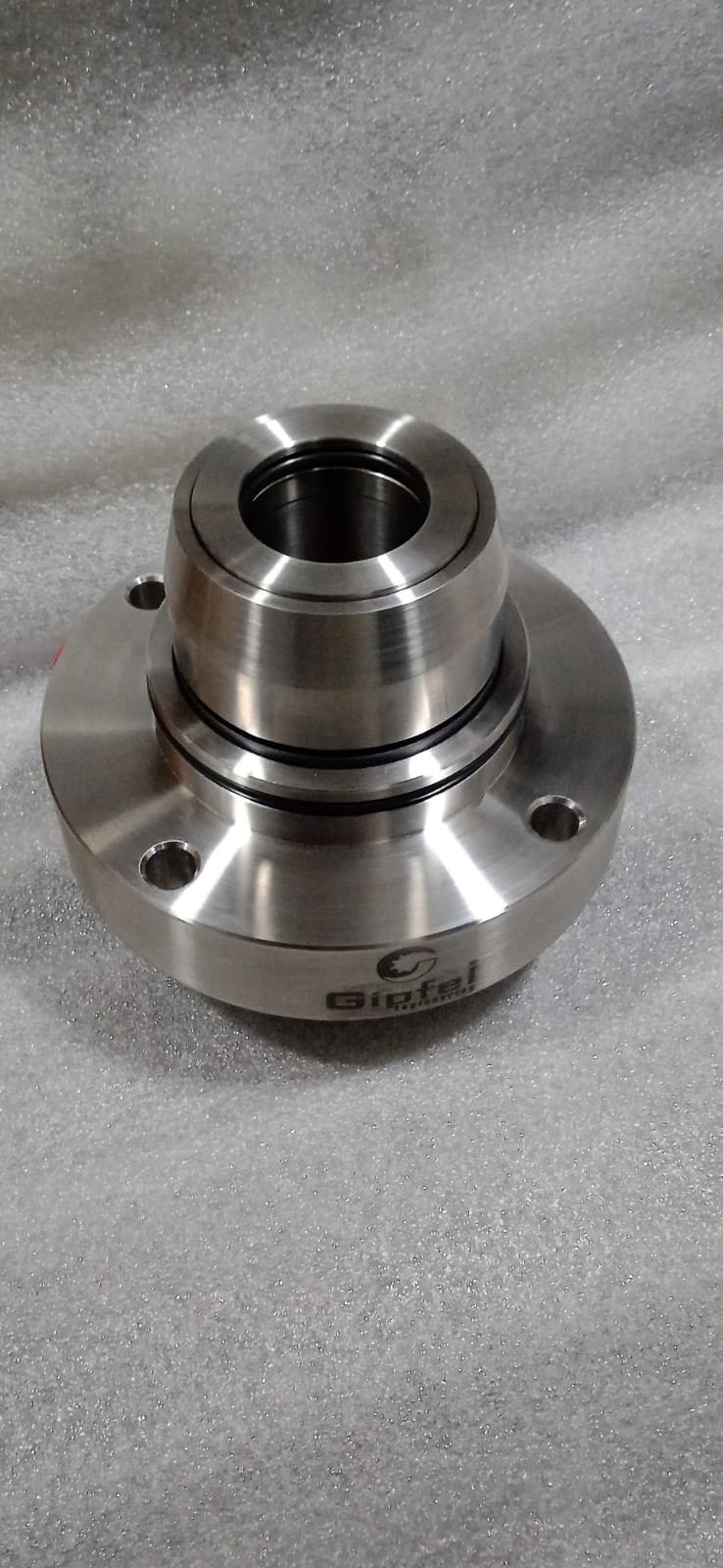
Product overview;
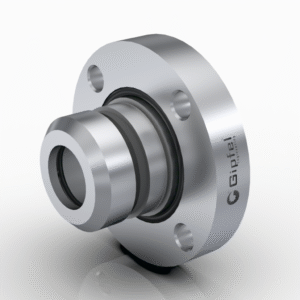
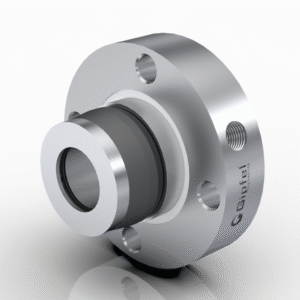
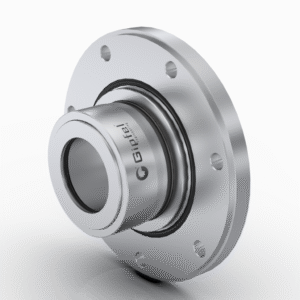
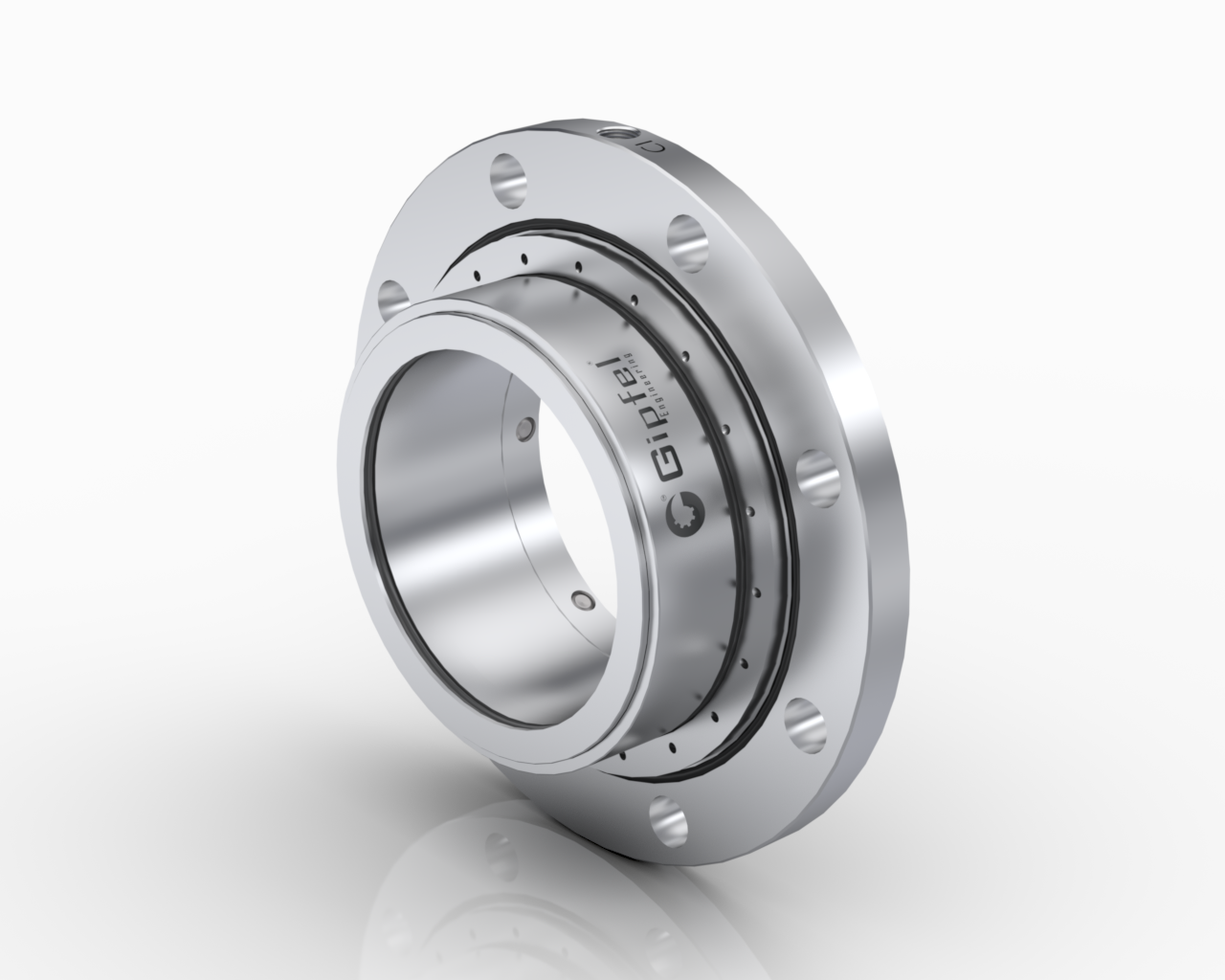
The MS820 is a medium-duty slurry mechanical seal designed to prevent leakage in abrasive, corrosive, and solids-laden slurry services. Slurries typically contain suspended solid particles that accelerate wear and can rapidly degrade conventional seals, so the MS820 incorporates a stationary spring configuration to enhance reliability in demanding duty conditions.
Design and operating principle;
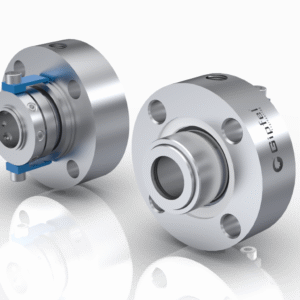
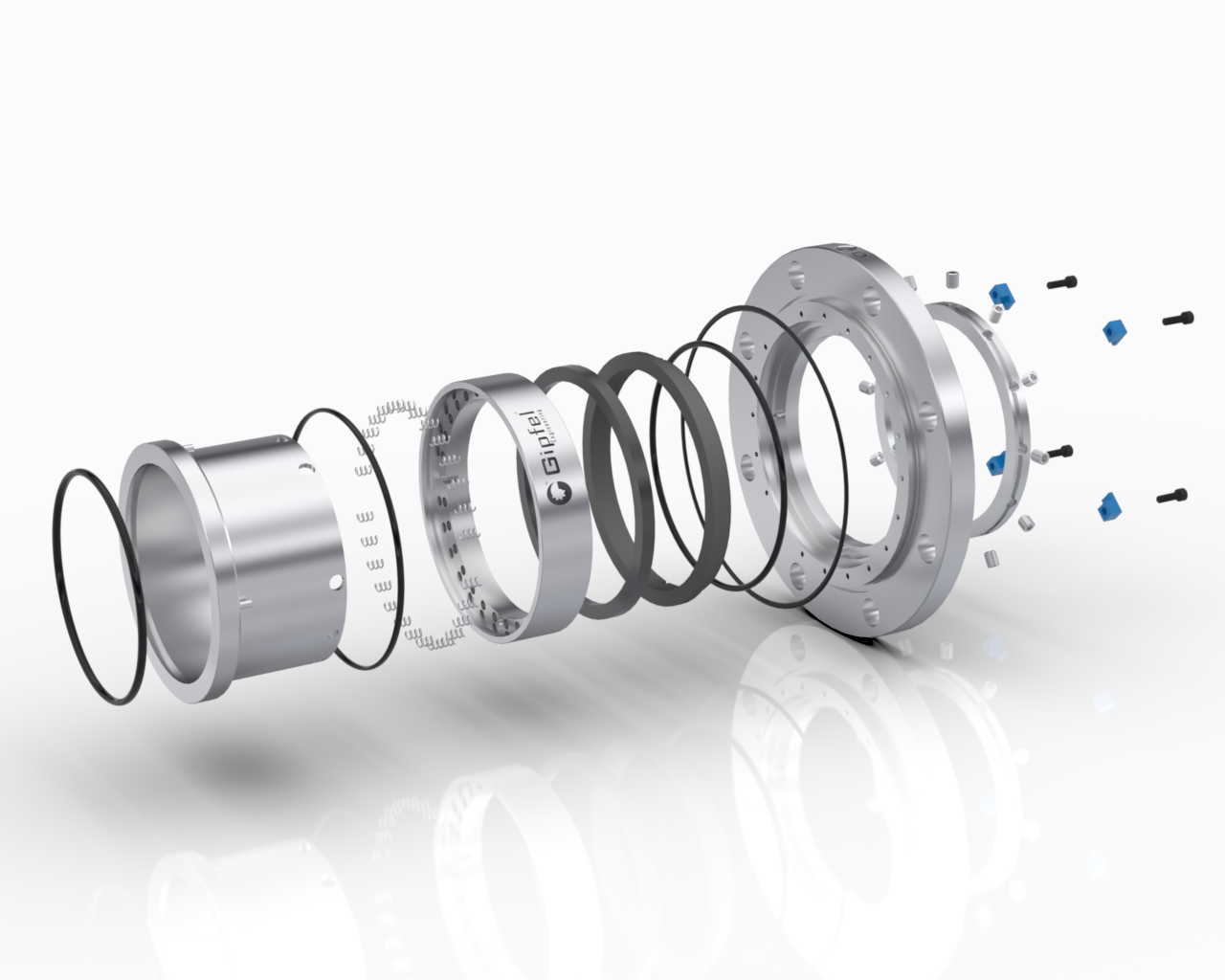
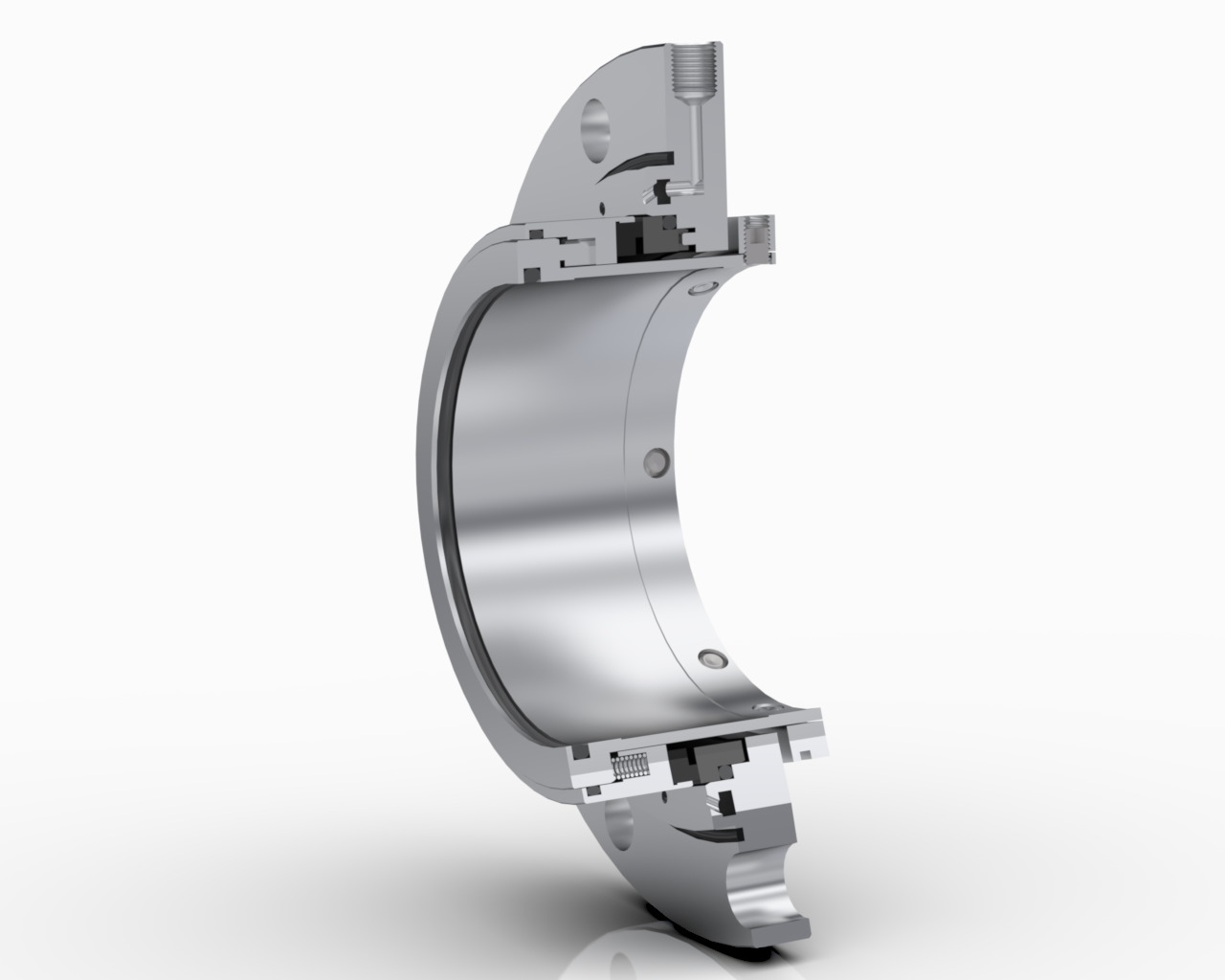
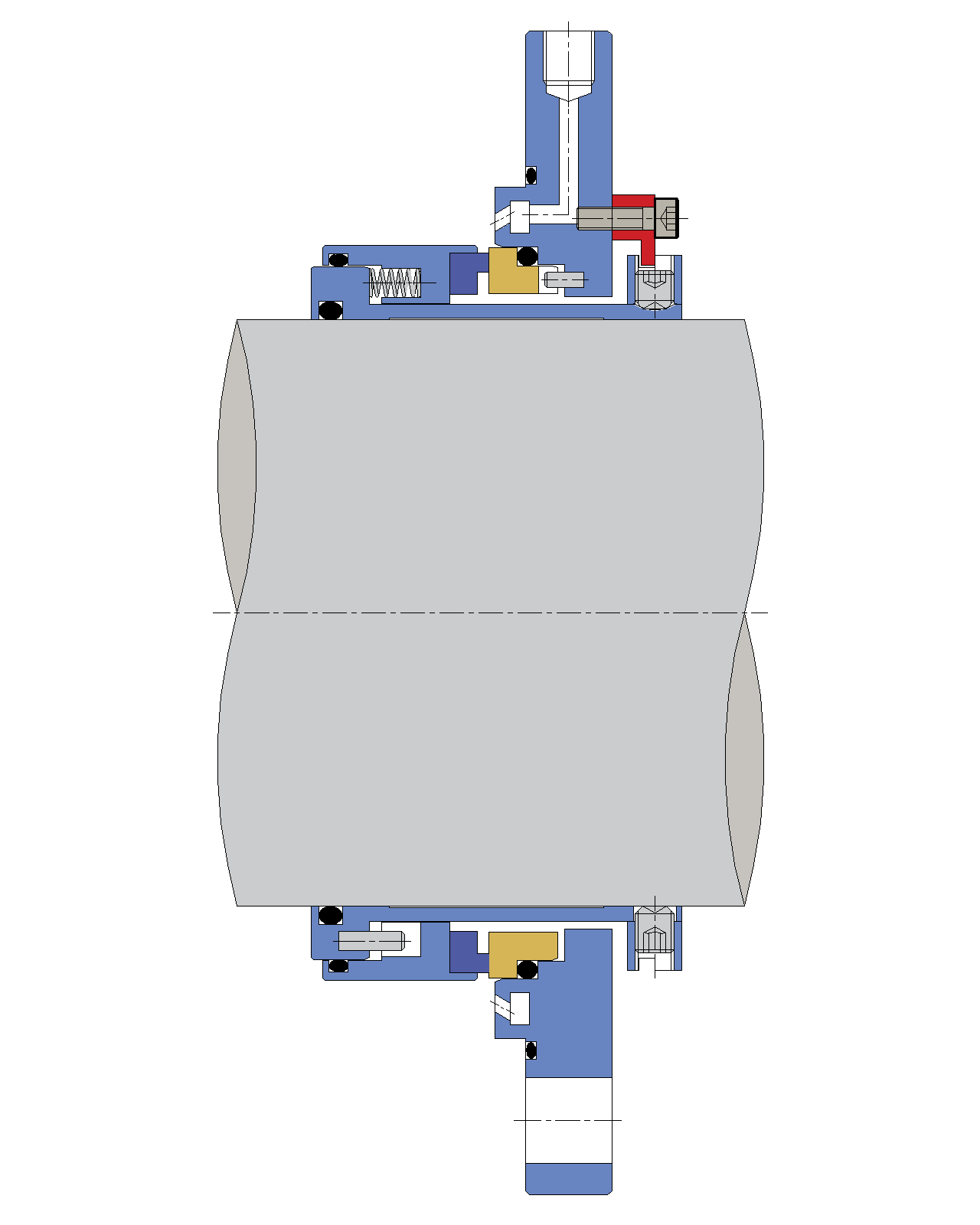
The MS820 uses a single, balanced, multi-spring pusher design with the spring set located on the stationary side of the seal. By positioning the springs away from the rotating slurry stream, the design helps reduce spring clogging, solids packing, and uneven face loading that are common with traditional rotary-spring slurry seals.
Hard-face combinations such as silicon carbide vs. silicon carbide or silicon carbide vs. tungsten carbide are recommended for abrasive media, aligning with established slurry-seal selection practices for high wear and corrosion resistance. This configuration maintains controlled face contact, stable leakage performance, and improved wear behavior in abrasive and crystallizing environments.
Technical features;
- Durability & reliability
- Hard-face combinations provide high resistance to abrasion and chemical attack, extending operational life in harsh slurry environments.
- Wide elastomer compatibility allows use of materials such as Viton, EPDM, and FFKM to match process chemistry and temperature requirements.
- Vibration- and shock-resistant design is engineered to tolerate pump vibrations and process pulsations without compromising sealing performance.
- Robust metallic construction offers wetted components in alloys such as Alloy 20, Hastelloy, or hard-coated steels for corrosion and erosion resistance.
- API piping plan compatibility (for example, plans 32, 53A, 53B) supports standard industry flushing, barrier fluid, and thermal control arrangements where required.
- Performance & efficiency
- Isolated springs are located outside the process fluid, preventing clogging by slurry particles and enhancing seal reliability and service life.
- Stationary spring configuration keeps springs static relative to the shaft, reducing mechanical wear and avoiding contamination or packing by solids.
- Hydraulically balanced design lowers closing force on the faces, reducing friction, heat generation, and wear—well suited to medium-pressure, abrasive slurry services with varying operating conditions.
- Multiple-spring design provides uniform face loading, improves stability under fluctuating pressure and temperature, compensates for axial misalignment, and increases mean time between failures (MTBF).
- Single-seal configuration is suitable for most medium-duty slurry applications, offering a cost-effective and easy-to-maintain solution; dual seals may be used were regulations, pressure, or toxicity demand additional containment.
- Installation & maintenance
- Metric and inch sizes available support global compatibility with regional and international equipment standards.
- Quick installation and easy removal are enabled by cartridge-style construction, which shortens maintenance interventions and reduces plant downtime.
- Independent of direction of rotation allows use on equipment with unknown or reversing shaft rotation, reducing inventory variety and simplifying selection.
- Factory-assembled and tested units ensure quality, reliability, and readiness for direct installation, with factory-set tolerances maintained for consistent performance.
- Cartridge construction provides a pre-assembled, factory-tested unit with accurate concentricity and alignment, eliminating field measurements or axial adjustments and minimizing installation errors in abrasive applications.
- Environmental & safety
- Flush, quench, and drain connections support safer, cleaner operation and maintenance by enabling solids control, temperature management, and controlled fluid evacuation, reducing environmental impact and improving operator safety.
- Key features summary
- Medium-duty slurry construction is suitable for abrasive, viscous, crystallizing, and solids-bearing fluids.
- Hard-face compatibility with SiC/SiC or SiC/TC pairings provides erosion resistance in slurry applications.
- Broad application coverage includes slurry pumps, process pumps, mixers, agitators, and other rotary equipment.
- Balanced seal geometry maintains stable face loading during pressure fluctuations and intermittent solids exposure.
- Stationary spring design keeps springs outside the main slurry turbulence zone, reducing clogging and spring fouling.
- Robust metallic hardware options such as SS 316, Duplex SS, Alloy 20, Hastelloy, and Titanium address a wide range of corrosive services.
- Flush-compatible configuration is suitable for clean external flush or product recirculation where solids control and additional cooling are required.
Service Overview;
| Parameter | Value |
| Equipment | Slurry pumps, process pumps, centrifugal pumps, mixers, agitators, rotary equipment |
| Fluid | Abrasive slurry, mineral slurry, crystallizing liquids, molasses, FGD slurry, hazardous liquids, dirty process fluids |
| Service Nature | Medium-duty, abrasive, erosive, viscous, crystallizing, solids-laden, intermittent slurry |
| Operating Mode | Continuous or intermittent operation with pressure fluctuation and solids exposure |
Specifications;
| Item | Min | Max | Typical/Notes |
| Size | 20 mm (0.750”) | 300 mm (12.000”) | Custom sizes on request |
| Pressure | Vacuum / low pressure | 15 bars (218 psi) | Higher pressure by engineered design review |
| Temp | -40°C (-40°F) | +220°C (+428°F) | Depends on elastomer and metallurgy |
| Speed | — | 2,900 rpm | Final limit depends on shaft size, slurry SG, and seal chamber conditions |
Materials;
| Component | Standard Material | Optional Material | Comment |
| Seal Faces | Silicon Carbide vs Silicon Carbide | Silicon Carbide vs Tungsten Carbide | Preferred for abrasive slurry and crystallizing fluids |
| Elastomers | FKM / EPDM / PTFE | FEP-encapsulated FKM, AFLAS, Kalrez | Selected according to chemical compatibility and temperature |
| Metal Parts | SS 316 | Duplex SS, Alloy-20, Hastelloy-B/C, Titanium | For chloride, acidic, caustic, or corrosive slurry services |
| Springs | SS 316 | Hastelloy-C, Alloy Steel | Stationary spring arrangement reduces slurry clogging risk |
Applications;
- Mining: gold mining, hard rock mining, mineral sand ore mining, tailings disposal.
- Offshore production: sand/gravel oil extraction and abrasive produced-fluid handling.
- Power and environmental systems: FGD slurry pumps, ash handling, utility slurry duties.
- Food and sugar: molasses, corn slurry, wet cement processing, sugar process equipment.
- Mineral processing: iron ore, bauxite, uranium, coal, copper, nickel, zinc, alumina refining.
- Pulp & paper, wastewater treatment, dyeing, distillery, synthetic rutile, tar sand extraction.
- Building services, mixers, agitators, slurry pumps, process pumps, and other rotary equipment.
- Chemical and process industries: solvents, phosphate, pigment, potash, fertilizers, hazardous liquids.
Operating Limits;
| Parameter | Value |
| Pressure | Up to 15 bars (218 psi) |
| Temp | -40°C to +220°C (-40°F to +428°F) |
| Speed | Up to 2,900 rpm |
| Size Range | 20 mm to 300 mm (0.750” to 12.000”) |
| Solids | 20% Maximum solids by weight |
| Particle Size | 6,000 Microns Maximum |
| Particle Hardness | 7 Mohs Maximum |